
Mariah Carey · Singer-songwriter and producer
Mariah Carey's Eyes: Brown or Hazel?
Brown is supported by a longtime makeup artist and independent in-person reporting; chocolate, gold, crystal and controlled lighting explain the warmer variations.
- Evidence status
- Longtime makeup artist + in-person profile
Last reviewed September 2, 2026
By Iris Analyzer Editorial Team
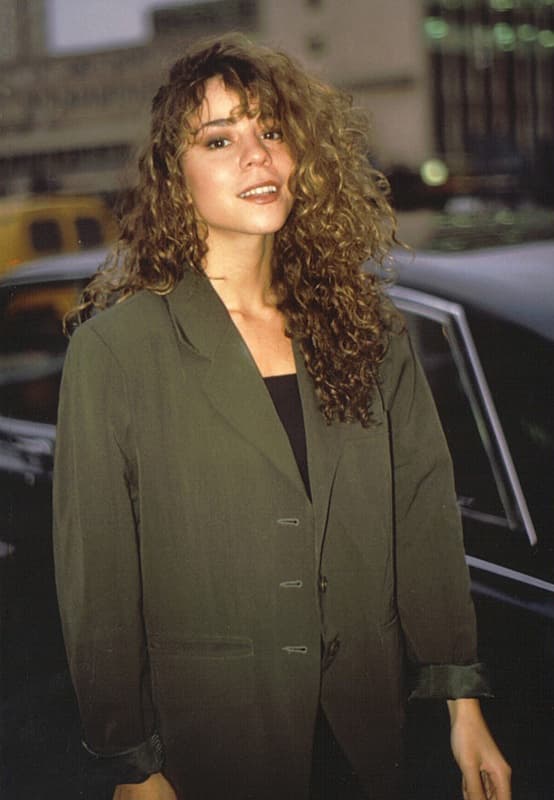
Mariah Carey, whose eyes are described as brown by her longtime makeup artist’s beauty coverage and an in-person newspaper profile.
Mariah Carey 1990 · Redhoopoe · CC BY-SA 2.0 · Local file unmodified

What color are Mariah Carey's eyes?
Brown is the strongest source-backed answer. Who What Wear interviewed Kristofer Buckle, Carey’s longtime makeup artist and close collaborator, about the beauty choices he uses on her. The feature identifies Carey’s big brown eyes as the focal point of the look. A Sunday Telegraph profile from 1999 independently describes her brown eyes during an in-person encounter. The two sources arise from different contexts—professional beauty practice and direct editorial observation—but converge on the same family.
The record does not supply a calibrated subtype. Warm brown is a reasonable descriptive refinement because Buckle regularly uses chocolate, earth tones and gold around the eyes, but those product choices cannot convert the baseline into amber or hazel. Brown eyes can reveal gold detail in strong light and look nearly black in shade. The concise answer should therefore remain brown, with apparent warmth treated as variation. That wording is more accurate than choosing a glamorous label from one retouched performance or holiday-campaign image.
What does Kristofer Buckle’s work establish?
Buckle’s account is valuable because he has worked directly with Carey since the late 1990s. He says her look is centered on the eyes and describes earth-toned crystals over smoky chocolate and gold shadow, sculpted brows and prominent lashes. Those elements create bright reflections and warm contrast around a brown iris. They can make the eye look larger, lighter or more golden, especially in a close-up, but the feature explicitly begins from brown rather than presenting that warmth as a new natural color.
Allure’s profile of Buckle independently establishes his professional relationship with Carey, while the M.A.C. collection coverage records the palettes, liner and false lashes associated with her aesthetic. Together these sources explain a repeatable visual language: neutral lips keep attention on the eyes, brown and gold echo iris warmth, and lashes increase definition. They do not document cosmetic contacts as the source of the baseline. The evidence is about enhancement and image-making, not a physical transformation of the iris or a clinical color assessment.
What does the in-person newspaper profile add?
The 1999 Sunday Telegraph profile describes Carey in an editing suite while she was finishing work on “Heartbreaker” and refers directly to her brown eyes. Its value is independence: the writer was not selling an eye product or answering a color query, but recording physical and behavioral detail during an encounter. That observation supports the broad family from outside Carey’s beauty team. It also predates much of the later high-glam holiday imagery that fuels competing golden or hazel claims.
There is an archival caveat. The accessible text is preserved by a fan-run Mariah archive rather than hosted on the Telegraph’s current site. The article should credit the Sunday Telegraph and original profile, describe the page as an archive transcript and avoid treating the fan site as a second independent publisher. The source remains useful when transparently labeled and supported by Buckle’s separate professional account. It should not be quoted beyond what is necessary or used to imply a precise shade the original writer did not provide.
How do videos, lighting and sunglasses change the look?
Carey’s Allure video retrospective makes clear that her music-video appearances are built through specific outfits, hair, makeup and narrative choices. Her dark-haired “Bianca” alter ego, smoky-eye eras and holiday productions are characters within authored visual worlds. The Guardian’s in-person profile likewise records the dramatic lashes central to her presentation. None of those looks is a neutral iris test. Warm lighting can amplify gold in brown, while deep shadow, dense lashes and a larger pupil can make the eyes look much darker.
Sunglasses and controlled lighting add another boundary. When the eye is photographed through tinted lenses, under spotlights or within a highly reflective crystal look, its apparent color is shaped by transmission and reflections. Cleveland Clinic guidance explains that surrounding colors and illumination can bring out different tones without changing actual pigment. The result is a wide visual archive in which Carey’s eyes may seem chocolate, gold or hazel-like. The explicit source descriptions remain brown, and stylized frames should explain variation rather than overrule them.
Does Mariah Carey wear colored contacts or have heterochromia?
The reviewed sources establish neither routine colored-contact use nor lenses as the explanation for Carey’s ordinary appearance. Buckle’s eye-centered account discusses crystals, shadow, brows and lashes while identifying brown as the feature being framed. Carey’s own music-video retrospective describes extensive visual transformation without supplying a contact-lens claim. This does not prove that no cosmetic lens has ever appeared in any production; it means the available record cannot support a broad assertion about her baseline.
No reliable first-person, clinical or major editorial source reviewed here documents heterochromia. One eye may look brighter in a photograph because Carey often favors a particular face angle, hair placement and carefully directed light. Different catchlights, partial sunglass tint, shadow or focus can create a left-right mismatch that disappears in the next frame. Those are not diagnostic signs. The supported account treats both irises within the brown family and keeps any character-specific styling separate from claims about permanent anatomy.
How this eye-color claim was verified
Verification prioritized two independent routes. Who What Wear interviewed Buckle and explicitly centered Carey’s big brown eyes in his professional approach. The archived Sunday Telegraph profile supplied an earlier in-person brown-eye description. Allure then established Buckle’s working relationship, documented the M.A.C. palettes around Carey’s signature look and gave Carey space to explain her own video transformations. The Guardian added independent reporting on her highly styled public presentation. None offered comparable evidence for a hazel baseline.
The conclusion is intentionally modest: naturally brown, often appearing warmer, deeper or more golden because of makeup, reflections and controlled light. Cleveland Clinic guidance supports the difference between tones being emphasized and a true adult color change. The fan-hosted newspaper transcript is labeled transparently, and no unsourced celebrity database or pixel sample is used. Routine contacts, heterochromia, exact shade, genetics, personality and health claims remain outside the evidence. That structure preserves both confidence in the broad answer and honesty about fine-shade uncertainty.
Questions, answered carefully
Sources and what they support
Each source is attached to a specific claim. The portrait is licensed editorial imagery and is not treated as diagnostic evidence.
01 · Who What Wear
Mariah Carey’s Exact Beauty Routine and Products
First-person contextSource checked September 2, 2026
Longtime makeup artist Kristofer Buckle identifies Carey’s big brown eyes as a focus.
Open source02 · The Sunday Telegraph (archived transcript)
A Girl Called Mariah
Editorial profileSource checked September 2, 2026
A preserved in-person newspaper profile describes Carey’s brown eyes.
Open source03 · Allure
Makeup Artist Kristofer Buckle: Unzipped
First-person contextSource checked September 2, 2026
Establishes Buckle’s direct working relationship with Carey.
Open source04 · Allure
The Mariah Carey M.A.C. Collection
Editorial profileSource checked September 2, 2026
Documents palettes, lashes and liner used in Carey’s styling.
Open source05 · Allure
Mariah Carey Breaks Down Her Iconic Music Videos
First-person contextSource checked September 2, 2026
Carey explains production and makeup choices.
Open source06 · The Guardian
Mariah Carey: I Try Not to Be a Jerk
Editorial profileSource checked September 2, 2026
Supplies independent in-person appearance and lighting context.
Open source07 · Cleveland Clinic
Eye Colors
Eye-health referenceSource checked September 2, 2026
Eye-color labels describe broad categories rather than universally agreed standardized shades. Hazel can combine visible brown, gold and green tones.
Open source