
Katy Perry · Singer-songwriter and television personality
Katy Perry's Eyes: Blue Naturally, Alien in ‘E.T.’
Blue is the well-supported natural color; the reptilian eyes in “E.T.” belong to a documented production transformation, not her everyday appearance.
- Evidence status
- Editorial + makeup-professional evidence
Last reviewed September 2, 2026
By Iris Analyzer Editorial Team
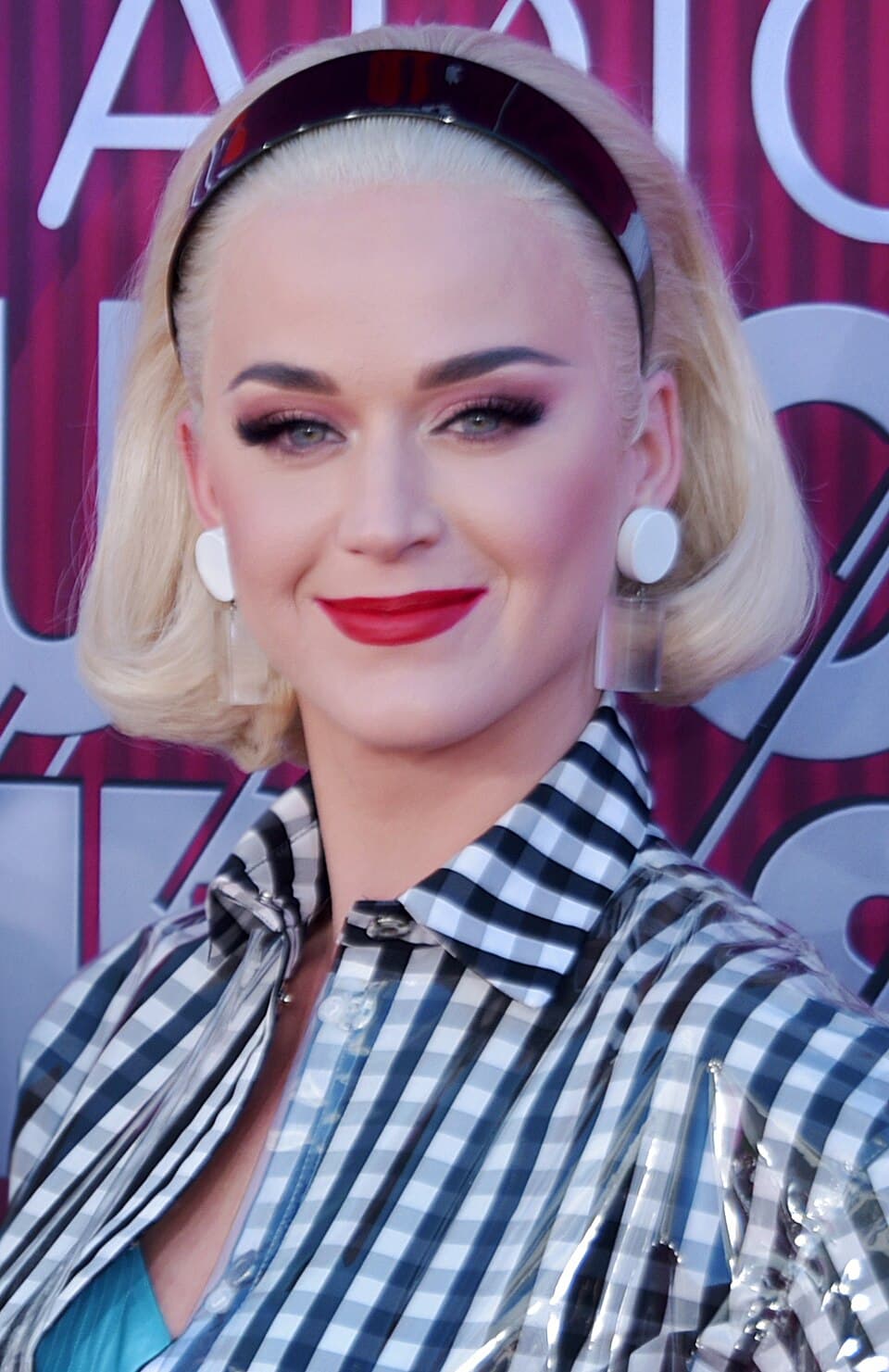
Katy Perry, whose blue eyes are identified in major profiles and by makeup professionals who work with her.
Katy Perry 2019 by Glenn Francis (cropped) · © Glenn Francis, www.PacificProDigital.com · CC BY-SA 4.0 · Commons crop; Wikimedia resize
.jpg)
What color are Katy Perry's eyes?
Blue is the source-backed answer. In Allure, makeup artist Todd Delano says Perry is meticulous about the brows that frame her beautiful blue eyes. Teen Vogue’s interview with an on-tour makeup artist likewise explains using warm brown tones to make those blue eyes pop. These are not guesses from remote photographs: they are comments from professionals making repeated, close-range color decisions around Perry’s face.
An ELLE writer independently supplies the same observation in a long in-person profile, describing false lashes making her blue eyes look exceptionally large. The wording focuses on styling, but the underlying color is unambiguous. Across a backstage encounter, beauty interviews and concert preparation, the sources agree on blue. There is no similarly strong evidence in this set for green, hazel, heterochromia or a permanently altered iris shade.
What do Katy Perry’s makeup artists establish?
Makeup artists are useful sources here because their work depends on evaluating color relationships under changing costumes and stage conditions. Delano says Perry’s signature cat eye and carefully shaped brows frame blue eyes. The touring artist tells Teen Vogue that natural warm browns make the blue stand out without clashing with colorful outfits. Both descriptions identify the same natural-looking base while also explaining why its intensity changes from one styled appearance to another.
Their testimony does not turn makeup into a clinical exam. It does, however, carry more evidentiary weight than a fan comparing compressed screenshots because the professionals saw Perry directly and describe deliberate choices. Warm brown shadow contrasts with blue, black liner sharpens the boundary around the eye and false lashes increase visual emphasis. Those techniques make the color more noticeable; they do not create the blue category that both the artists and the independent ELLE profile report.
What happened to her eyes in the “E.T.” video?
The alien and reptilian eye effects in “E.T.” were part of a designed character transformation. CBS reports Perry saying that each makeup look took five or six hours and comparing the process to film prosthetics that turn a performer into an animal or monster. Us Weekly’s retrospective identifies reptilian contact lenses alongside pastel body makeup and the elaborate headdress. Together, the accounts make the correct scope clear: this was a documented music-video costume, not a reveal of her ordinary iris color.
That distinction matters because stills from the video circulate without production context. An unusual pupil, a patterned iris or a dramatic color in that imagery should not be used to argue that Perry’s eyes are naturally reptilian, hazel or another shade. The source record explains the effect directly. A precise article can acknowledge contacts where evidence exists while refusing to expand one role-specific use into the claim that she routinely changes her eye color off set.
Why can her blue eyes look different on camera?
Perry’s visual work often uses saturated sets, colored stage light, graphic liner and rapidly changing hair or wardrobe palettes. A light iris can pick up reflected color and appear cooler, grayer or greener beside those surroundings. Pupil size and catchlights also change how much iris texture is visible. Cleveland Clinic notes that makeup, clothing and environmental lighting can bring out different tones in light-colored eyes without the eye itself changing color.
Photography adds exposure, white balance, sensor response, retouching and final color grading. Research designed to compare iris pigmentation uses standardized illumination and camera settings because uncontrolled pictures do not provide stable measurements. A tour photograph, magazine cover and fantasy video are built for different aesthetic goals. Their color differences are meaningful to the image, but not reliable evidence of a biological shift. Blue remains the supported answer across direct sources outside those variable frames.
Does Katy Perry usually wear colored contacts?
The evidence supports a narrow yes for the reptilian “E.T.” effect, not a broad claim of routine wear. The production coverage names contact lenses in that specific video, while her makeup artists and the ELLE profile refer normally to her blue eyes. None of those sources says her everyday blue is created by cosmetic lenses. Presenting the role-specific fact as a general habit would therefore go beyond the available reporting.
This is also why the article should avoid reverse-engineering lenses from reflections or apparent rings in photographs. Decorative lenses can alter color and pattern, but a screenshot alone rarely shows whether a lens is present, what product was used or how an image was processed. The “E.T.” case is verifiable because production reporting explains the transformation. Other appearances should remain unclassified unless an equally explicit first-person, makeup-department or reputable editorial source documents them.
How this eye-color claim was verified
Verification began with direct professional and editorial proximity. Allure and Teen Vogue quote makeup artists who worked with Perry and independently identify blue. ELLE adds an in-person profile using the same color. CBS then records Perry’s own explanation of the labor-intensive “E.T.” makeup process, while Us Weekly identifies the reptilian lenses in that specific look. These sources answer two separate questions: her ordinary color is blue, and one famous fantasy appearance was deliberately transformed.
The conclusion keeps those evidence lanes separate. It does not infer an exact blue subtype from imagery, claim heterochromia or suggest that a music-video lens explains every tonal variation. Cleveland Clinic and photographic-grading research provide the methodological context for ordinary differences among pictures. The resulting profile can be confident where the record is explicit and cautious where it is not: natural blue, documented “E.T.” contacts, and no substantiated claim here of routine color alteration.
Questions, answered carefully
Sources and what they support
Each source is attached to a specific claim. The portrait is licensed editorial imagery and is not treated as diagnostic evidence.
01 · Allure
Katy Perry’s Makeup Artist on Her Most Iconic Looks
First-person contextSource checked September 2, 2026
Perry’s makeup artist discusses techniques used to emphasize her blue eyes.
Open source02 · ELLE
Fantastic Voyage: Katy Perry
Editorial profileSource checked September 2, 2026
An editorial profile describes Perry’s eyes as blue.
Open source03 · Teen Vogue
Katy Perry’s Tour Makeup
First-person contextSource checked September 2, 2026
The beauty report documents stage makeup that changes contrast around Perry’s eyes.
Open source04 · CBS News
Katy Perry Describes Grueling Makeup for E.T. Video
First-person contextSource checked September 2, 2026
Perry describes the extensive role-specific makeup used for the E.T. music video.
Open source05 · Us Weekly
Katy Perry’s Most Memorable Music Video Looks
Editorial profileSource checked September 2, 2026
The feature documents contact lenses as part of Perry’s E.T. character transformation.
Open source06 · Cleveland Clinic
Can Eye Color Change?
Eye-health referenceSource checked September 2, 2026
Apparent eye color can vary with lighting and surroundings, while a new persistent change warrants professional evaluation.
Open source07 · Eye (Nature) via PubMed Central
A novel eye color classification scale for epidemiological studies
Scientific referencePublished December 13, 2013Source checked September 2, 2026
Reproducible photographic iris grading depends on standardized illumination, camera settings and processing.
Open source