
Angelina Jolie · Actor, filmmaker and humanitarian
Angelina Jolie's Eyes: Blue or Maleficent Green?
In-person profiles support natural blue; Maleficent’s luminous green, goat-like eyes were a documented character effect.
- Evidence status
- In-person profiles + production sources
Last reviewed September 2, 2026
By Iris Analyzer Editorial Team
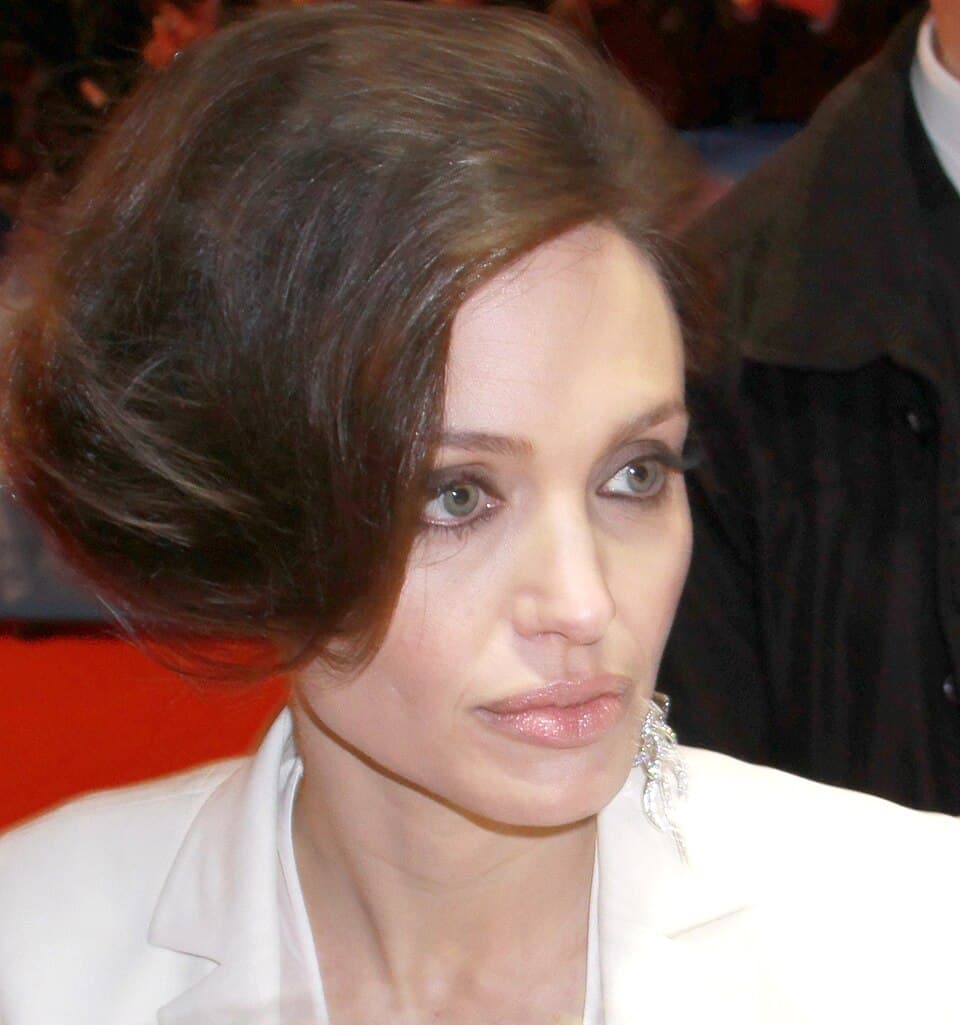
Angelina Jolie, whose natural eyes are described as blue in major profiles; her Maleficent eye design used custom contacts and visual effects.
Angelina Jolie 2009 · Richard Hebstreit · CC BY 2.0 · Wikimedia resize

What color are Angelina Jolie's natural eyes?
Blue is the answer supported by the strongest direct editorial evidence. An ELLE profile written after an in-person conversation describes Jolie’s almond-shaped eyes as a placid blue and adds that the shade can be difficult to make out on film. An earlier Esquire profile likewise records her looking at the interviewer with large blue eyes. The agreement is notable because the observations come from separate writers, years and interview settings.
Those accounts are more reliable than comparing unrelated red-carpet crops. Neither publication claims a calibrated iris examination, so this page does not assign a narrower clinical shade such as ice blue or blue-green. The sources do establish the ordinary category with reasonable confidence. When another image looks green, gray or turquoise, the first question should be how it was lit, styled and processed—not whether the natural color permanently changed.
Why are Angelina Jolie’s eyes sometimes called green?
Light irises do not reproduce identically in every photograph. Warm lighting can mute blue and introduce a greener impression; cool grading can make the same iris look pale cyan or gray. Dark liner, shadow and lashes increase contrast around the iris, while skin tone and costume supply neighboring colors that influence perception. A still chosen from a stylized film is therefore a record of that finished frame, not a neutral color sample.
ELLE’s observation that Jolie’s blue can be hard to distinguish on film is especially useful. It acknowledges the gap between an in-person view and the moving image without suggesting a pigment change. Photographic iris research also relies on controlled illumination, fixed settings and reference standards when repeatability matters. Celebrity portraits, premieres and movies are optimized for mood and storytelling, so their apparent colors should be interpreted within those conditions.
How were Maleficent’s green eyes created?
Maleficent’s eyes were part of an intentional creature design. In Allure’s production interview, special-effects makeup artist Rick Baker explains that Jolie’s contact lenses were based on goat eyes and used horizontal pupils. He also attributes the unusual direction to Jolie’s creative input. The effect belonged with the horns, prosthetic cheekbones and other choices that moved the performer away from an ordinary human appearance and toward the animated character’s fantasy world.
The contact-lens record answers a common screen myth directly: the luminous green appearance is not evidence that Jolie’s natural color is bright green. It is a documented film effect. The sources do not say that the same lenses were worn outside this role, and they do not support the idea that her public eye color is generally manufactured by contacts. The safe conclusion stays production-specific, just as it would for a wig, prosthetic or costume.
What did contacts, makeup and visual effects each contribute?
The practical lenses established the iris color and goat-like horizontal pupil on set. Dark eye makeup and the film’s pale facial palette intensified the contrast, making the eyes feel even more luminous. Vanity Fair’s account adds another layer: the lenses were painted in detailed colors, and the visual-effects team supplied a final glow when Maleficent became upset. The finished eye was therefore the combined work of contact design, makeup, lighting and post-production.
This production chain explains why a promotional still can look more saturated than a behind-the-scenes frame. Each department builds toward the character rather than preserving a forensic record of the actor. NPR Illinois separately reports that Jolie suggested goat-eye-style contacts, corroborating the broad design history. Together the sources let an article describe the transformation confidently while avoiding unsupported claims about the precise lens brand, prescription or effect used in every scene.
Natural eye color versus character design
A celebrity reference should keep two different questions separate. “What color are Angelina Jolie’s eyes?” concerns the person and is answered by in-person profiles: blue. “Why are Maleficent’s eyes green?” concerns the production and is answered by the makeup team: custom contacts, with additional visual treatment. Blending those evidence tracks creates the false impression that one frame can disprove a close-range editorial observation made outside the character.
The same rule prevents overcorrection. Because Maleficent used green lenses, it does not follow that every greenish photograph of Jolie shows contacts. Lighting and processing can shift a pale iris without a lens, and the reviewed sources do not document routine cosmetic contact use. Equally, a very blue portrait does not establish an exact permanent shade. The evidence supports a broad natural category and one clearly identified role transformation—nothing more expansive.
How this eye-color claim was verified
The verification begins with two independent in-person profiles that explicitly choose blue. It then tests the most visible counterexample against production reporting. Allure quotes the special-effects makeup artist, Vanity Fair details the painted lenses and added glow, and NPR supplies a separate account of the goat-eye concept. That combination is substantially stronger than an unsourced listicle or an attempt to sample pixels from a color-graded movie frame.
The final wording preserves the limits of each source. It does not label Jolie’s eyes heterochromatic, diagnose an ocular condition or promise that blue will look identical in every image. It does not treat fictional character design as natural anatomy, and it does not generalize Maleficent’s lenses to other films. Readers comparing their own eyes should use evenly lit, unfiltered photographs and remember that a visual resemblance cannot establish identity, genetics, kinship or health.
Questions, answered carefully
Sources and what they support
Each source is attached to a specific claim. The portrait is licensed editorial imagery and is not treated as diagnostic evidence.
01 · ELLE
Angelina Jolie Profile
Editorial profileSource checked September 2, 2026
The in-person profile describes Jolie’s eyes as blue and notes that the shade can be difficult to read on film.
Open source02 · Esquire
Angelina Jolie Is the First Sexiest Woman Alive
Editorial profileSource checked September 2, 2026
The in-person profile independently describes Jolie’s eyes as blue.
Open source03 · Eye (Nature) via PubMed Central
A novel eye color classification scale for epidemiological studies
Scientific referencePublished December 13, 2013Source checked September 2, 2026
Reproducible photographic iris grading depends on standardized illumination, camera settings and processing.
Open source04 · Allure
The Scoop on Angelina Jolie's Makeup in Maleficent
First-person contextSource checked September 2, 2026
Makeup artist Rick Baker explains that Maleficent’s character contacts were based on goat eyes and used horizontal pupils.
Open source05 · NPR Illinois
How Angelina Jolie's Dark Fairy Look Came Together
Editorial profileSource checked September 2, 2026
Independent production reporting says Jolie suggested the goat-eye-style contacts for Maleficent.
Open source06 · Vanity Fair
Angelina Jolie's Maleficent Transformation
Editorial profileSource checked September 2, 2026
The production account documents custom painted contact lenses and a separate visual-effects glow.
Open source