
Billie Eilish · Singer-songwriter
Billie Eilish's Eyes: What Color Are They?
Major profiles agree on blue; pale, icy and gleaming describe the visual impression, while Ocean Eyes is song history rather than biometric evidence.
- Evidence status
- Multiple in-person profiles
Last reviewed September 2, 2026
By Iris Analyzer Editorial Team
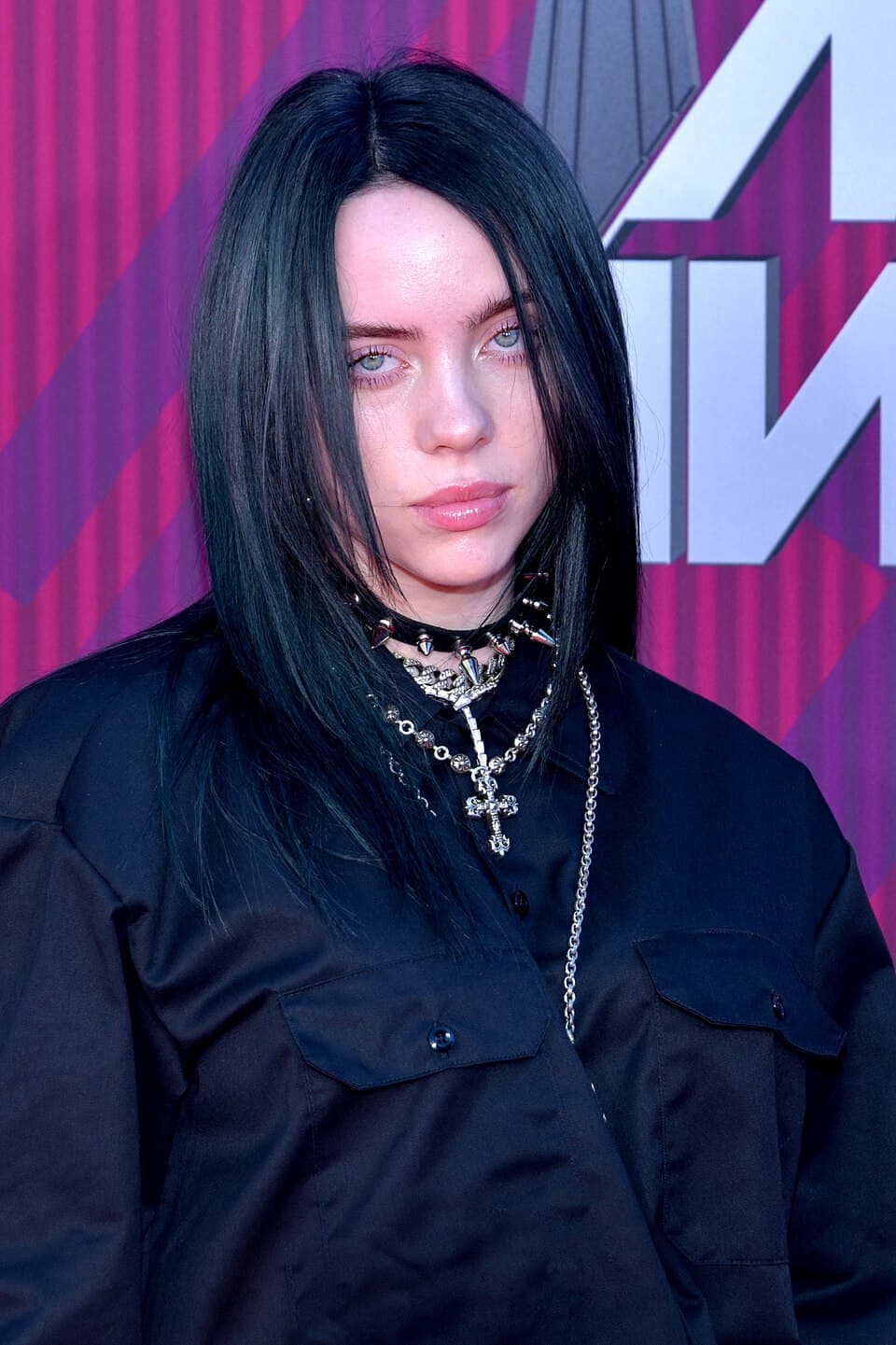
Billie Eilish, whose eyes are consistently described as blue by major fashion and music publications.
Billie Eilish 2019 by Glenn Francis · © Glenn Francis, www.PacificProDigital.com · CC BY-SA 4.0 · Wikimedia resize

What color are Billie Eilish's eyes?
Blue is the consistent answer across strong editorial sources. A Vogue cover profile describes Eilish’s eyes as pale blue. ELLE calls them large and ice blue during an in-person interview, while Rolling Stone Australia uses gleaming blue in a later long-form feature. Vogue’s beauty coverage also repeatedly chooses blue. Different writers reach for different modifiers, but the basic category remains remarkably stable across years and styling eras.
Pale, icy and gleaming are impressions rather than standardized grades. They can describe lightness, coolness, contrast or the way a catchlight appears without identifying a distinct biological subtype. None of the cited publications records a calibrated iris photograph or clinical pigment measurement. A source-checked profile can therefore state blue confidently while declining to assign a permanent hex value, a medical label or an exact blue-gray boundary from editorial language alone.
What does the no-makeup interview add?
ELLE’s profile is particularly useful because the writer notes that Eilish was not wearing makeup while describing her eyes as ice blue. That observation removes one obvious styling variable from that specific encounter. It does not turn the interview into a clinical examination, and the adjective “ice” remains expressive. Still, it provides stronger evidence than a fan inference based on a heavily styled red carpet or a music-video frame.
The interview also demonstrates how contrast persists without liner. At the time, lighter hair, clothing and room light shaped the overall visual field, while the writer observed Eilish at conversational distance rather than through a reposted screenshot. Read alongside Vogue’s pale-blue wording and Rolling Stone’s blue description, the account supports the broad natural color. It does not prove that every image reproduces that color neutrally or exclude ordinary variation in perceived saturation.
How do hair and makeup change the impression?
Vogue’s hair coverage offers a clear example of simultaneous contrast. When Eilish changed to a rich mocha shade, the publication said the darker hair lit up her icy blue eyes. The iris did not acquire more blue pigment; the surrounding palette made a light feature more prominent. Black hair and brows can produce a similar effect, while pale hair or low-contrast lighting may make the same eyes feel softer, grayer or less saturated.
In a later pre-show routine, Vogue describes Eilish using a brown pencil at the waterline and soft brown shadow, then notes that those colors make her blue eyes pop. Brown and neutral tones can frame the iris without competing with it, and mascara strengthens the dark boundary around the eye. The feature documents deliberate styling in Eilish’s own routine, but it does not suggest that makeup changes her natural color or that cosmetic contacts are involved.
Was Ocean Eyes named after Billie Eilish’s eyes?
The song title should not be treated as biometric evidence. Teen Vogue’s early interview history says the track was written and produced by Eilish’s brother Finneas and recorded when her dance teacher wanted original music for choreography. Other reporting consistently identifies it as the sibling collaboration that became her breakthrough. That history establishes authorship and release context; it does not establish that the lyric is a literal self-description of Billie’s irises.
The title naturally became associated with Eilish after the song’s success, especially because editorial writers later connected her light blue eyes with the imagery. That cultural association is real, but it runs in the opposite direction from a measurement. The reliable case for blue comes from explicit profile descriptions, not from interpreting a song title. A careful article can explain the memorable coincidence without inventing a first-person color statement that Eilish did not make.
Why do her eyes vary in videos and stage photographs?
Eilish’s visual work deliberately uses extreme palettes. Rolling Stone recalls imagery in which blue eyes appear with black tears, while concert photography may combine colored spotlights, LED screens, haze and deep shadow. A camera then applies exposure and white balance before editors grade, sharpen and compress the result. A pale iris can become electric blue in one frame and subdued gray in another without any biological change or cosmetic lens.
Beauty imagery introduces different but equally deliberate conditions. A close softbox creates broad catchlights; dark waterline makeup emphasizes shape; hair color alters contrast; and publication retouching balances skin and surrounding tones. These stages are designed to create a coherent image, not a repeatable eye-color record. No strong source reviewed here documents colored contacts as the explanation for Eilish’s familiar blue appearance, so visual inconsistency alone should not be promoted into that claim.
How this eye-color claim was verified
The verification favors convergence among established publications. Vogue supplies pale-blue and icy-blue descriptions in separate features; ELLE provides an in-person observation without makeup; Rolling Stone adds independent music-profile corroboration. The makeup routine explains how Eilish frames the feature herself, and Teen Vogue keeps the Ocean Eyes story in its proper songwriting context. Together those sources are stronger than a fan database, color-picked pixel or copied celebrity list.
The conclusion remains intentionally broad. It says blue, not a measured ice, ocean, gray-blue or turquoise subtype. It does not claim heterochromia, cosmetic contacts or a health condition, and it does not infer personality or ancestry from appearance. Readers comparing an iris should use an evenly lit, unfiltered close-up and treat the result as a description of that image. Looking like a celebrity cannot verify identity, genetics, family relationship or medical status.
Questions, answered carefully
Sources and what they support
Each source is attached to a specific claim. The portrait is licensed editorial imagery and is not treated as diagnostic evidence.
01 · Vogue
Billie Eilish on Climate Activism and Radical Hope
Editorial profileSource checked September 2, 2026
The in-person cover profile describes Eilish’s eyes as pale blue.
Open source02 · ELLE
Billie Eilish Is Calling the Shots
Editorial profileSource checked September 2, 2026
The profile describes Eilish’s eyes as ice blue while noting that she was not wearing makeup.
Open source03 · Vogue
Billie Eilish Masters the Hair Color Trend of the Moment
Editorial profileSource checked September 2, 2026
The feature describes icy blue eyes and explains how darker hair increases their apparent contrast.
Open source04 · Vogue
Billie Eilish Shares Her Pre-Show Makeup Routine
First-person contextSource checked September 2, 2026
The first-person routine calls her eyes blue and shows how brown liner and shadow make them stand out.
Open source05 · Rolling Stone Australia
Billie Eilish Would Like to Reintroduce Herself
Editorial profileSource checked September 2, 2026
The in-person profile describes Eilish’s eyes as blue while discussing her visual imagery.
Open source06 · Teen Vogue
How Billie Eilish's Ocean Eyes Became a Breakout Song
First-person contextSource checked September 2, 2026
The direct interview establishes that Finneas wrote the song and that it was recorded for dance choreography, not as a biometric claim.
Open source