
Hrithik Roshan · Actor
Hrithik Roshan's Eyes: Green, Aquamarine, or Something Between?
Major Indian publications describe aquamarine or green eyes; the difference is editorial language, not evidence of changing irises.
- Evidence status
- Established descriptions vary
Last reviewed September 2, 2026
By Iris Analyzer Editorial Team
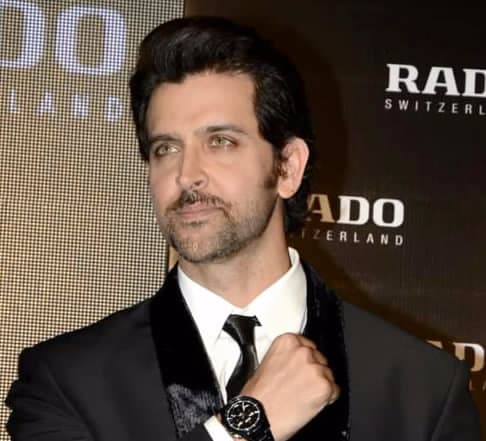
Hrithik Roshan, whose light eyes have been described as aquamarine and green by established Indian publications.
Hrithik Roshan · Bollywood Hungama · CC BY 3.0 · Local file unmodified

What color are Hrithik Roshan's eyes?
The strongest public evidence supports a light green-to-blue-green appearance, but it does not settle on one exact label. A long-form Filmfare profile describes Roshan’s eyes as aquamarine. Years later, Hindustan Times film critic Anupama Chopra wrote about the piercing green of his eyes while discussing how the film War presented its stars. Both are direct editorial descriptions from established publications, and neither is based on a fan-made color chart.
The responsible answer is therefore “reported as aquamarine and green.” Aquamarine is an expressive color word that usually suggests a mixture of blue and green; green is a broader everyday category. The sources do not record a clinical examination, controlled iris photograph, color reference or statement from Roshan naming his own exact shade. Keeping both labels visible is more accurate than quietly promoting one observer’s wording into a measured fact.
Why aquamarine and green can both appear in credible coverage
Ordinary eye-color language does not operate like a laboratory scale. An observer may emphasize blue in a cool-lit portrait and call a light iris aquamarine, while another may see more yellow-green contrast in a finished movie and call the same feature green. Clothing, skin tone, set color, exposure and final grading all change the context in which the iris is perceived. None of those effects requires the underlying eye color to change.
That is why this page does not choose a single promotional photograph, sample a few pixels and announce a definitive shade. A movie frame has already passed through lenses, lighting, camera settings, color grading, compression and a viewer’s display. Even an unedited event photograph captures one fraction of a second under a particular white balance. The stable evidence is that independent Indian entertainment coverage repeatedly identifies Roshan as light-eyed, with wording clustered around aquamarine and green.
How War turned eye color into part of the screen image
The Hindustan Times description appears in a critique of on-screen vanity, which matters to how it should be read. Chopra argues that War deliberately varnishes its action and its stars, mentioning visual choices that highlight the green of Roshan’s eyes. The passage is evidence that green was the critic’s perceived color, but it also documents how strongly a production can guide the audience toward noticing a feature.
This distinction keeps the article from confusing styling with biology. Costume colors can create complementary contrast, a close key light can reveal more iris texture, and a tight shot can make eye color more prominent than it would be in ordinary conversation. War used those tools as part of its glamorous visual language. The result helps explain why searches about Roshan’s eye color persist, but the polished frame remains an artistic presentation rather than a neutral specimen image.
What Roshan said about controlling his eyes for Kaabil
Roshan’s Indian Express interview about Kaabil provides a more substantial eye story than color alone. While preparing to play a blind man, he said the challenge was not reacting to visual stimulus. Pupillary responses and blinking around flashing light are involuntary, he explained, so action scenes required him to build greater control over the visible reactions that a sighted performer would ordinarily make without thinking.
That first-person account should be presented as acting preparation, not as a medical demonstration of blindness. Roshan also described meeting and talking with visually impaired people while developing the role. The useful editorial point is how much meaning audiences read from eye movement: focus, blinking and reaction to light can communicate sight even before dialogue does. His preparation aimed to remove signals that would contradict the character, not to imitate one universal way that blind people look or behave.
The eye-donation pledge behind another famous-eye headline
Indian Express also reported that Roshan pledged his eyes after working on Kaabil. The hospital director quoted in the report referred to him as light-eyed and said the pledge could encourage others to consider donation. That source strengthens the broad description that his eyes are visibly light, while the pledge supplies a public-health context that is more meaningful than ranking celebrity shades.
The wording needs one clarification: people commonly say they “donate their eyes,” but corneal donation is not a transfer of a celebrity’s iris color to a recipient. The cited report is evidence of Roshan’s pledge and the campaign around it; it does not establish a medical record of his iris pigmentation, nor does it mean a recipient would inherit his visible eye color. This article keeps the biographical fact without turning it into a genetics or transplant myth.
How the claim was checked—and where certainty stops
Verification began with sources that actually put a color word in text. Filmfare supplies aquamarine; Hindustan Times supplies green and explains the film context in which that color stood out. Indian Express adds Roshan’s own detailed account of controlling visual reactions for Kaabil and independent reporting on his eye-donation pledge. These sources do different jobs, so they are not flattened into a single claim that none of them makes.
The resulting profile is confident about the broad conclusion and transparent about the limit. Roshan is consistently presented as light-eyed, with aquamarine and green the best-supported descriptors in this evidence set. There is no sourced basis here for claiming colored contacts, heterochromia, a permanent hex value or a medically verified subtype. Readers can compare the published descriptions with an image, but the image should not be used to erase the uncertainty the reporting honestly leaves intact.
Questions, answered carefully
Sources and what they support
Each source is attached to a specific claim. The portrait is licensed editorial imagery and is not treated as diagnostic evidence.
01 · Filmfare
I'm not going to glorify my problems: Hrithik
Editorial profileSource checked September 2, 2026
Filmfare describes Roshan's eyes as aquamarine.
Open source02 · Hindustan Times
Playing against type
Editorial profileSource checked September 2, 2026
Hindustan Times describes Roshan's eyes as green.
Open source03 · The Indian Express
Hrithik Roshan opens up about Kaabil
First-person contextSource checked September 2, 2026
Roshan discusses preparing for and performing a blind character in Kaabil.
Open source04 · The Indian Express
Hrithik Roshan pledges to donate his eyes
Editorial profileSource checked September 2, 2026
The report documents Roshan’s eye-donation pledge.
Open source