
Eva Green · Actor
Eva Green's Eyes: Blue or Green?
Her own description, an in-person profile and Lisa Eldridge support blue; credible blue-green and green descriptions make the shade boundary worth preserving.
- Evidence status
- First-person blue + credible shade disagreement
Last reviewed September 2, 2026
By Iris Analyzer Editorial Team
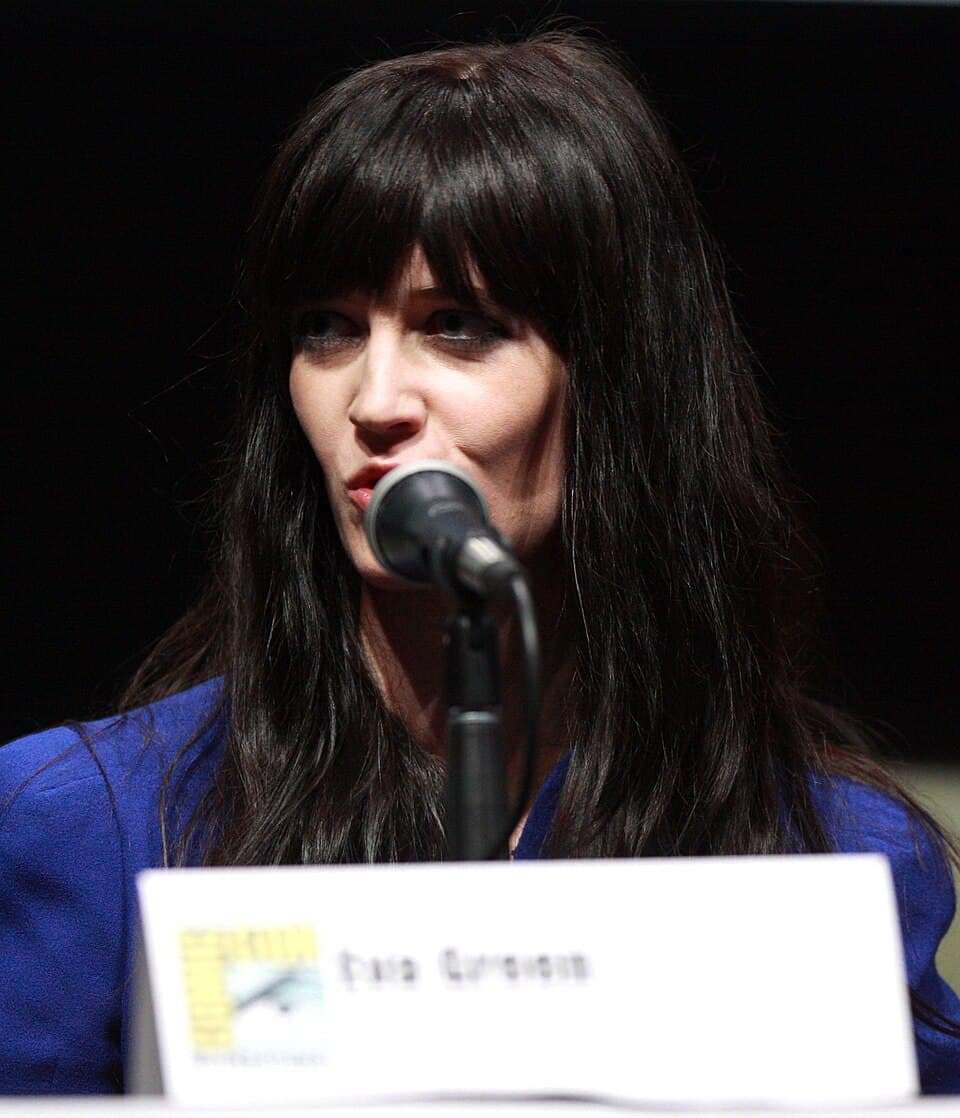
Eva Green, whose eyes she and several direct observers call blue, while other sources describe a green or blue-green appearance.
Eva Green by Gage Skidmore · Gage Skidmore · CC BY-SA 3.0 · Wikimedia resize

Are Eva Green's natural eyes blue or green?
Blue has the strongest direct support. In a Condé Nast Traveller beauty interview, Green says that dark red works well around blue eyes and makes them pop. The statement appears in her own answer about red-carpet preparation, making it more useful than an unattributed biography. The Guardian’s Elizabeth Day independently met Green in person and wrote that she looked at the reporter with blue eyes, despite the heavy coal-colored shadow framing them that day.
Makeup artist Lisa Eldridge provides a third strong line of evidence. After doing Green’s makeup for an InStyle shoot, Eldridge described her pale skin and piercing blue eyes, then listed the dark products used around them. Yet the record is not unanimous: makeup artist Anne Marie Leprêtre uses blue-green and green/blue, while Picturehouse calls them green. The careful answer is therefore blue, with a documented blue-green to green appearance range rather than false precision.
Why the first-person and makeup evidence lead
Green’s own wording has a narrow but meaningful advantage: she is discussing complementary color on her own face, not speaking hypothetically about someone else. Eldridge’s account is similarly grounded in direct work. She explains that she concentrated intensity around Green’s eyes while keeping skin and lips natural, and explicitly calls the eyes blue. The Guardian adds independent in-person corroboration in an ordinary interview setting. Together, the three sources make blue the best-supported family-level answer.
None of them is an ophthalmic color measurement. Green’s comment assumes ordinary language, Eldridge worked under shoot lighting, and The Guardian reporter observed her through real-world ambient light. That leaves room for cyan, gray or green components within a light iris and for different observers to choose different words. It does not leave equal support for every online label. The evidence hierarchy favors blue while treating blue-green as a responsible qualification supported by another working makeup professional.
What the green and blue-green descriptions mean
Anne Marie Leprêtre describes Green’s gaze as vivid blue-green and later calls the eyes green/blue while analyzing her dark beauty look. Picturehouse introduces an interview by calling them piercing green. These are credible descriptions of appearance and should remain visible. A boundary iris can contain cool blue structure plus enough yellowish or gray influence to produce a green impression under certain illumination. Editorial writers may also choose the component that feels most visually prominent in the image before them.
The disagreement does not require the natural color to change. Color constancy is influenced by the black hair, pale skin, red lips and smoky shadow that define many Green looks. Warm red around a blue iris can intensify blue through contrast, while warm or yellow-biased illumination can push the combined impression toward green. “Blue, often blue-green” acknowledges both the strongest evidence and the documented observer variation. Calling the answer pure green would underweight Green’s own statement and two direct blue observations.
How smoky makeup changes the visible balance
Green tells Condé Nast Traveller that she loves a smoky eye and learned that dark red makes blue eyes pop. Eldridge used black and gray products to focus intensity around the eyes for InStyle. Leprêtre describes the familiar combination of black smoky shadow, extended liner, defined brows and dark red or purple lips. These choices alter contrast, brightness and the surrounding color field. They can make a pale iris appear clearer, cooler, deeper or greener without adding color to it.
British Vogue offers useful photography context. Green praises Patrick Demarchelier’s use of lighting and discusses a black-and-white Vogue shoot, a reminder that celebrated portraits are authored images rather than neutral records. Black-and-white work removes iris hue entirely; color editorials still choose lighting, grading and reproduction. Makeup sources can tell us what artists intended to emphasize, but screenshots and magazine pixels should not overrule explicit descriptions from the person, a direct makeup artist and an interviewer who observed her in person.
What Sin City can—and cannot—prove about her eyes
TIME’s review of Sin City: A Dame to Kill For calls Green’s eyes emerald within the film’s monochrome murk. That phrase is useful evidence of the character’s screen appearance, not a natural-color measurement. The review itself emphasizes a black-and-white palette interrupted by selected colors. In such a production, cinematography, effects and grading determine which hues survive and how strongly they appear. An emerald impression in that constructed world cannot outweigh first-person and in-person descriptions of blue.
The review also does not say colored contact lenses created the effect. A role-specific lens claim requires production testimony or another reliable source identifying the lens; a vivid screenshot is insufficient. The same boundary applies to heterochromia. No reviewed source documents different natural colors between Green’s left and right eyes. Reflections, selective grading and asymmetrical light may make two eyes differ in a frame. That is a property of the image until credible evidence establishes something about the person.
How the Eva Green eye-color claim was checked
Verification began with the highest-value statements. Green refers to her own blue eyes in Condé Nast Traveller; The Guardian records blue during an in-person interview; and Eldridge says piercing blue after applying Green’s makeup herself. Leprêtre supplies a professional blue-green and green/blue counter-description, while Picturehouse supplies a green editorial label. TIME demonstrates how a stylized role can produce an emerald screen impression, and British Vogue documents the importance of lighting and authored photography.
The conclusion preserves that hierarchy and disagreement. Blue is the leading natural-color answer; blue-green is a useful qualification; green is a reputable appearance description rather than an error to erase. Makeup, black hair, pale skin, white balance, pupil size and grading can change which component dominates. The reviewed record does not establish cosmetic colored contacts or heterochromia. A future production source could document lenses for a specific role, but it would need to be kept separate from the natural baseline established here.
Questions, answered carefully
Sources and what they support
Each source is attached to a specific claim. The portrait is licensed editorial imagery and is not treated as diagnostic evidence.
01 · Condé Nast Traveller
Beauty Kit: Eva Green
First-person contextSource checked September 2, 2026
Green directly discusses colors that work around her blue eyes.
Open source02 · The Guardian
Eva Green Interview: Playing Evil
Editorial profileSource checked September 2, 2026
An in-person profile describes Green’s eyes as blue.
Open source03 · Lisa Eldridge
Eva Green
First-person contextSource checked September 2, 2026
Makeup artist Lisa Eldridge describes Green’s eyes as piercing blue.
Open source04 · Anne Marie Leprêtre
Dark and French Beauty: Eva Green
First-person contextSource checked September 2, 2026
A makeup professional uses blue-green and green-blue descriptions.
Open source05 · Picturehouse
Eva Green: The Big Interview
Editorial profileSource checked September 2, 2026
The editorial introduction describes Green’s eyes as green.
Open source06 · British Vogue
From Bond to Burton: Eva Green
Editorial profileSource checked September 2, 2026
The profile supplies lighting and photography context.
Open source07 · TIME
Eva Green Is the Dame to Kill for in Sin City 2
Editorial profileSource checked September 2, 2026
The review uses emerald for a highly stylized character image.
Open source