
Green vs Hazel Eyes: How to Tell the Difference
The most-confused pair in eye color, settled with two checks.
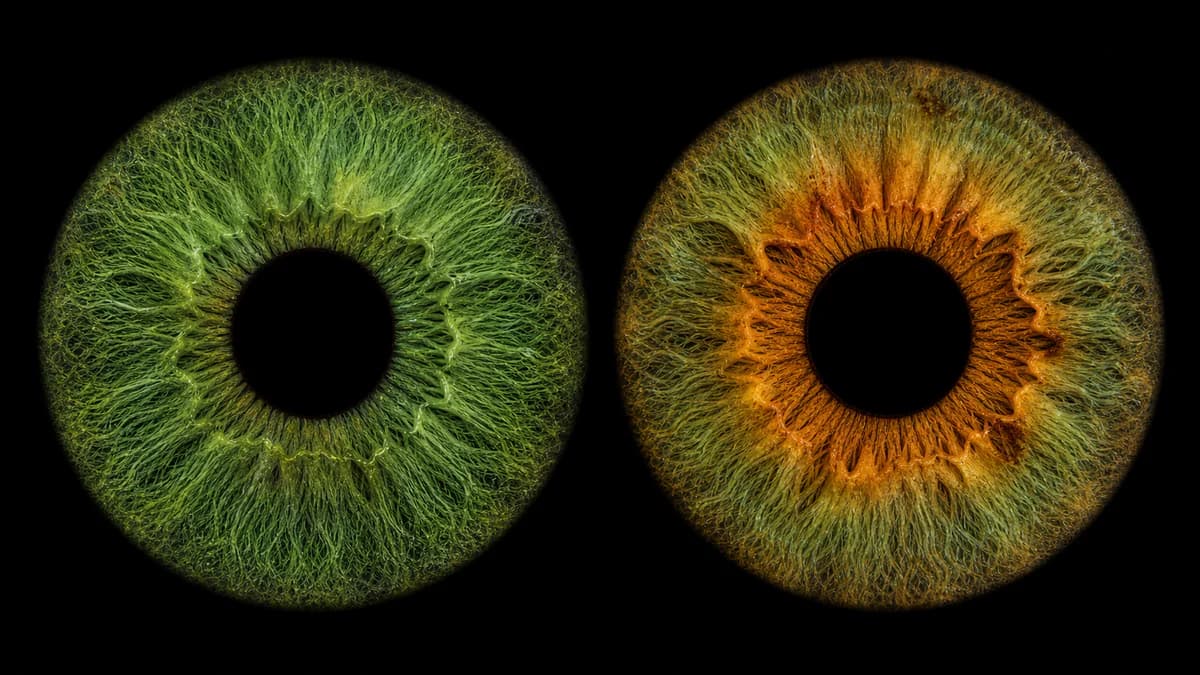
The core difference
Green eyes are green across the whole iris — the shade may vary, but the color family stays green. Hazel eyes are a mix: green plus brown or amber, usually arranged in zones, most often a warm core around the pupil with a green outer ring.
If someone has ever told you your eyes "change color," that’s a hazel tell. The pigments don’t change; different lighting emphasizes different zones.
Are my eyes green or hazel? Start with your photo
- Take a close-up of one eye in indirect daylight, without a filter or colored contacts.
- Compare the green and hazel examples above. Look at the whole iris as well as the area around the pupil.
- Analyze the photo to explore its visible color mix. Lighting can affect the result; a photo estimate is a guide, not a definitive classification.
The free analyzer gives you a visible eye-color breakdown and a wearable-color tip, so you can move from comparing shades to trying a look.
Check my eye color freeThe two-minute check
In natural daylight, look at a close-up photo of one eye:
- Zone test: is the area around your pupil a different color family (brown/amber) than the outer iris? Different zones → hazel
- Uniformity test: same green family from pupil to rim, even if lighter or darker? → green
- Wardrobe test: if brown tops make your eyes look brown and green tops make them green → hazel
Let the percentages decide
The definitive answer is the ratio. An iris analysis that shows a green or olive majority with only trace brown reads green; substantial brown or amber (roughly 20% or more) alongside green is hazel. A photo analysis takes about 60 seconds and shows the exact mix.
Why the confusion is genetic
Green and hazel are neighbors on the melanin scale — both sit in the middle band between blue's near-zero pigment and brown's dense pigment. The same handful of genes (OCA2 and HERC2 chief among them) sets that overall level; what separates the two colors is distribution. Spread the pigment evenly and you get green. Concentrate it in a warm core around the pupil and you get hazel.
That's also why the two run together in families: parents with hazel eyes often have green-eyed children and vice versa. The ingredients are inherited; the arrangement is the coin flip.
Photograph them like a pro
Before you compare your eyes to any chart, control the photo. Use indirect daylight from a window, skip the flash, and look straight at the camera. Flash flattens exactly the zoned detail that gives hazel away, and warm indoor bulbs push everything toward brown.
Then zoom in on one iris. If you can trace a distinct color boundary — a gold or brown ring giving way to green — you're looking at hazel. If the shade deepens toward the rim but stays in the green family, that's green.
Stop guessing — measure it
Photo-based color percentages, rarity score, and a shareable Iris Card in 60 seconds. Private: your photo never leaves your device.
Analyze My Eye Color FreeFrequently asked questions
Can hazel eyes be mostly green?
Yes — hazel spans a range from green-dominant to brown-dominant. What makes them hazel is the meaningful presence of both families, typically in visible zones.
Why do my eyes look green some days and brown on others?
That’s the classic hazel behavior. Your iris contains both pigmented zones; lighting and nearby colors (clothing, makeup) shift which zone dominates visually.
Which is rarer, green or hazel?
Green — about 2% of people worldwide versus roughly 5% for hazel. The analyzer bases rarity on whichever broad family has the largest combined share; an amber ring is descriptive and does not add rarity points.
Are green eyes with a brown ring around the pupil still green?
That ring is the deciding factor. If it's a thin fleck, most classifications still call the eye green — often green with central heterochromia. If the brown or gold zone is substantial (roughly 20% or more of the iris), the mix reads as hazel. A percentage breakdown makes the call objective.
Do green and hazel eyes photograph differently?
Yes. Green stays relatively stable across photos, while hazel swings noticeably with white balance, flash, and surrounding colors — warm light amplifies its brown core, cool light amplifies its green ring. If your eye color looks different in every photo, that volatility itself is a hazel clue.