
Ana de Armas · Actor
Ana de Armas's Eyes: Hazel or Green? The Sources Compared
A production-specific source says naturally hazel; green is a credible observer description of how that hazel can appear.
- Evidence status
- Production report + editorial profile
Last reviewed September 2, 2026
By Iris Analyzer Editorial Team
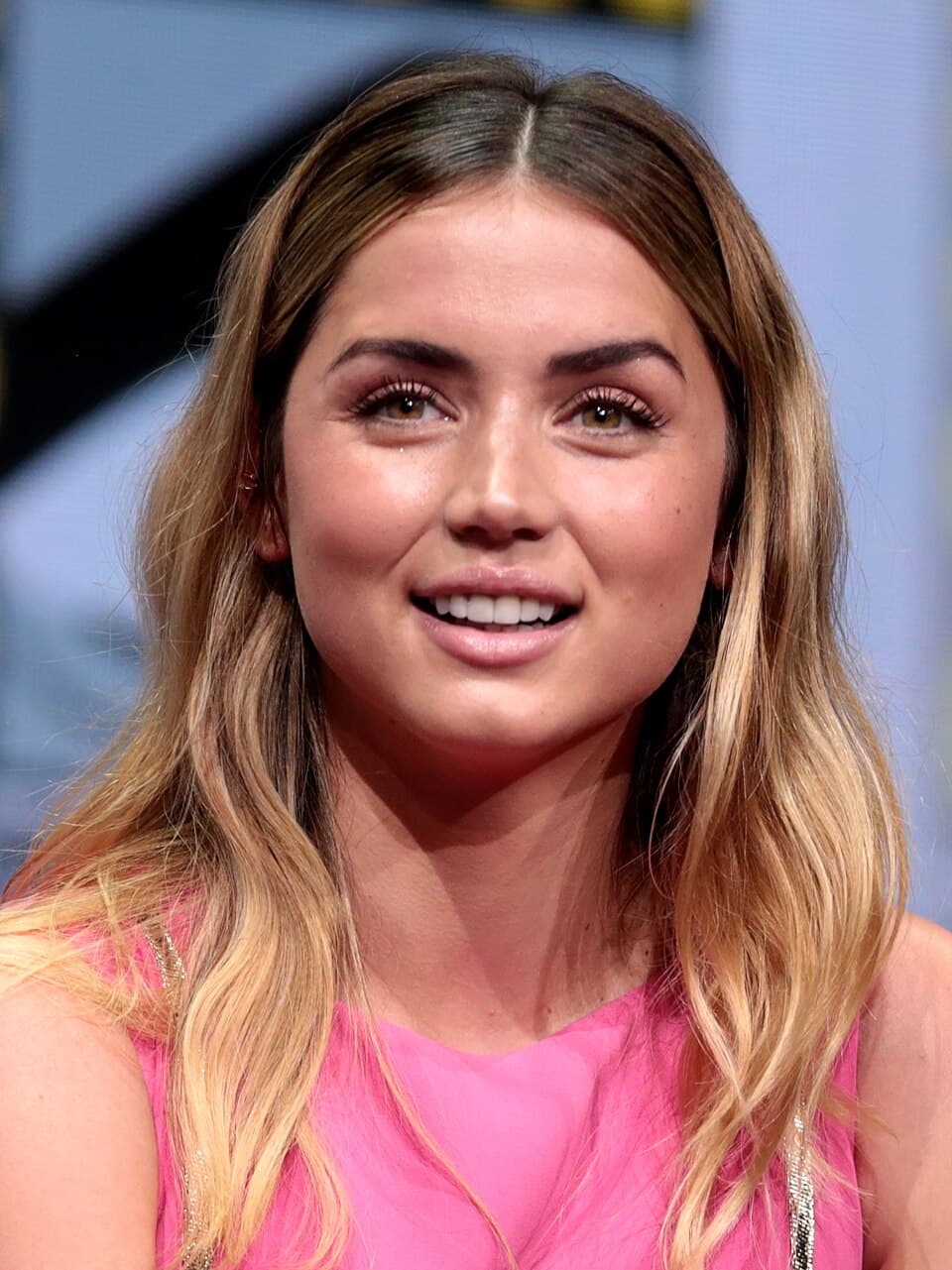
Ana de Armas, whose natural eyes Vanity Fair identifies as hazel and whose green appearance has been noted by other major profiles.
Ana de Armas by Gage Skidmore (cropped) · Gage Skidmore · CC BY-SA 3.0 · Commons crop; Wikimedia resize
.jpg)
What color are Ana de Armas's eyes?
Hazel is the strongest source-backed answer. In its report on the physical transformation for Blonde, Vanity Fair states that de Armas wore blue contact lenses over her naturally hazel eyes. The detail appears alongside reporting on bleached brows, wigs and lashes used to approximate Marilyn Monroe, giving the eye-color description a specific production reason rather than making it a passing compliment.
There is also credible green wording. In a TIME100 Next tribute, her Knives Out co-star Jamie Lee Curtis recalls looking into de Armas’s green eyes during their first scene. That is a direct observation from someone who worked face-to-face with her, but it is still a perception under one setting. The careful synthesis is “naturally hazel, often perceived as green,” not a claim that the sources prove two different natural colors.
Why a hazel iris can be described as green
Hazel is a mixed everyday category, and the balance an observer notices can shift with conditions. Cleveland Clinic explains that people do not all divide eye colors into precisely the same set of labels and that an iris can contain multiple visible tones and patterns. If green occupies much of the visible field while warmer pigment sits closer to the pupil, one observer may choose hazel and another may simply choose green.
The two published descriptions therefore do not require a biological change or a secret styling explanation. TIME records Curtis’s impression in a dramatic, tearful scene; Vanity Fair records the natural color while explaining why blue contacts were needed for a transformation. The latter is more targeted evidence for the natural category. The former remains valuable evidence for how strongly green can register in person and on a set.
What Blonde changed with blue contacts and lashes
Vanity Fair reports that the Blonde team covered de Armas’s naturally hazel eyes with blue contacts and strategically placed false lashes to alter their apparent shape. The production was not merely brightening her existing color. It was replacing the visible iris hue and changing the frame around the eye as part of a detailed attempt to evoke Monroe. That makes Blonde stills unsuitable evidence for de Armas’s natural eye color.
The shape work matters as much as the contacts. Lash direction, density and placement can make an eye appear rounder, narrower, more lifted or more downturned even though the anatomy beneath is unchanged. Combined with bleached brows, period lighting and color treatment, the result creates a new screen identity. This is a documented example of why a role image should never be treated as an unfiltered celebrity reference portrait.
How de Armas frames her eyes away from character transformations
In a British Vogue beauty interview, de Armas says that mascara and a small wing make her feel awake and ready even though she does not wear much makeup every day. For the No Time to Die premiere, makeup artist Mélanie Inglessis told Vogue that the team created a soft, defined eye with feathered liner extending outward to elongate the shape. Both accounts describe changes to contrast and silhouette rather than iris color.
Those techniques can still influence color perception. Dark mascara and liner create a stronger boundary around the visible iris, while a soft surrounding palette can make green components within hazel appear more noticeable. A feathered wing also leads the viewer’s attention horizontally, changing the overall impression of the eye area. The natural-color conclusion remains hazel because the cosmetic frame and the iris are separate layers of the image.
Why photographs produce different color answers
A peer-reviewed iris-grading study illustrates what reliable comparison requires: standardized illumination, controlled camera settings, consistent white balance and a reference system. Editorial portraits, red-carpet pictures and movie frames are optimized for story or style instead. Warm light can strengthen the brown-gold component of hazel, cool grading can suppress it, and bright frontal light can expose green and radial texture that disappear in shadow.
Digital processing adds more variation. Local contrast, saturation, skin-tone correction, compression and the viewer’s display can all affect the small iris region. Sampling a pixel from one image creates a number for that processed file, not a permanent measurement of de Armas’s eyes. Explicit reporting about her natural hazel color carries more evidentiary weight than a screenshot that seems to show pure green, blue or brown.
How the hazel conclusion was reached
The sources were ranked by how directly they answer the natural-color question. Vanity Fair is the anchor because it reports a production intervention: blue contacts were used to cover naturally hazel eyes. TIME is strong evidence that her eyes can present as green because Curtis describes an in-person working encounter. Vogue and British Vogue document the liner, mascara and shaping choices that change presentation without changing the underlying iris.
The conclusion deliberately stops before unsupported claims. No reviewed source establishes two differently colored irises, a sector of a separate color, a medical condition or permanent use of cosmetic contacts outside a role. Calling the eyes naturally hazel while acknowledging frequent green perception accounts for all of the reputable evidence. Calling them heterochromatic would introduce a new claim that none of these sources makes.
Questions, answered carefully
Sources and what they support
Each source is attached to a specific claim. The portrait is licensed editorial imagery and is not treated as diagnostic evidence.
01 · Vanity Fair
How Ana de Armas Became Marilyn Monroe for Blonde
Editorial profileSource checked September 2, 2026
The production report describes de Armas’s natural eyes as hazel and documents blue contacts used for Blonde.
Open source02 · TIME
Ana de Armas
Editorial profileSource checked September 2, 2026
TIME’s profile uses a green-eye description.
Open source03 · Cleveland Clinic
Eye Colors
Eye-health referenceSource checked September 2, 2026
Eye-color labels describe broad categories rather than universally agreed standardized shades. Hazel can combine visible brown, gold and green tones.
Open source04 · Vogue
Ana de Armas Gets Ready for the Bond Premiere
First-person contextSource checked September 2, 2026
The feature documents eye makeup and lighting context for a premiere look.
Open source05 · British Vogue
Ana de Armas Beauty Interview
First-person contextSource checked September 2, 2026
The direct beauty interview provides styling context around de Armas’s eyes.
Open source06 · Eye (Nature) via PubMed Central
A novel eye color classification scale for epidemiological studies
Scientific referencePublished December 13, 2013Source checked September 2, 2026
Reproducible photographic iris grading depends on standardized illumination, camera settings and processing.
Open source