
Why Do Blue Eyes Look Blue Without Blue Pigment?
Blue is a structural color: the iris returns blue light without containing blue dye.
The short answer
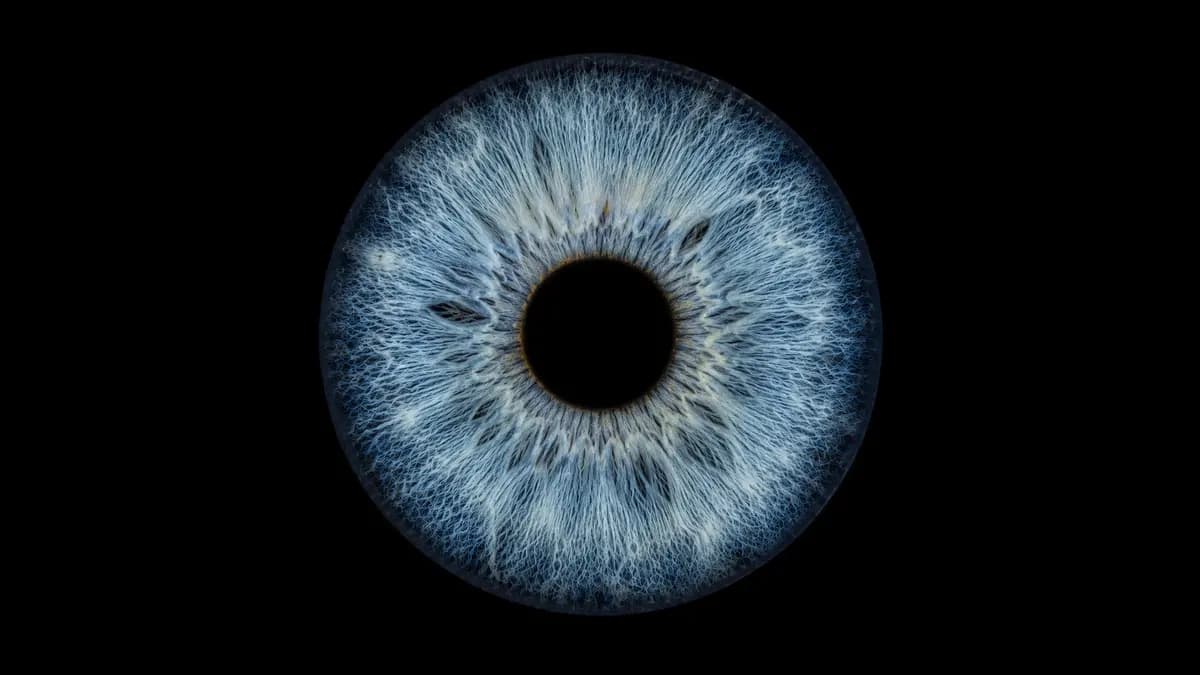
Blue eyes do not contain blue pigment. They usually have relatively little melanin in the visible front layers of the iris. Light entering that lightly pigmented, fibrous tissue is scattered, and shorter blue wavelengths are returned more strongly to the viewer. The result is structural color: an appearance created by material and light rather than blue dye.
Pigment and structure work together
The back of the iris is darkly pigmented in most people, while much of the visible difference between brown and blue comes from melanin in the anterior stroma. With abundant melanin, more light is absorbed and the iris looks brown. With less melanin, the fibrous structure contributes more to the reflected signal and the eye can look blue or gray.
Why blue can become gray, green or teal
Blue eyes are not one standardized shade. Fiber density, small amounts of pigment, amber flecks and a differently colored central zone all change the mixture. Warm illumination can pull forward yellow and gray undertones; cool daylight can strengthen blue. A blue iris with enough warm pigment in the visual mix may read as green or teal in some conditions.
Cameras exaggerate the shift
Automatic white balance, exposure, HDR and sharpening can move a pale iris farther than a dark one. Pupil size also changes how much of the inner and outer iris is visible. Compare only sharp, unfiltered photos made with the same rear camera in indirect daylight if you want a dependable baseline rather than a gallery of conflicting blues.
The genetic link is real—but not simple
Variants in HERC2 can reduce the activity of OCA2 and therefore lower melanin production, which strongly influences blue-versus-brown appearance. Other genes refine the outcome. Eye color alone cannot diagnose health, prove ancestry or reveal a complete genotype, and a photo analyzer measures visible pixels rather than DNA.
Stop guessing — measure it
Photo-based color percentages, rarity score, and a shareable Iris Card in 60 seconds. Private: your photo never leaves your device.
Analyze My Eye Color FreeFrequently asked questions
Is there any blue pigment in blue eyes?
No blue iris pigment is responsible for the color. Blue appearance comes mainly from low melanin in the front of the iris and selective scattering of light through its structure.
Why are some babies born with blue-gray eyes?
Melanin production may still be developing after birth. Some light infant eyes darken during the first years as more pigment becomes visible, while others remain blue.
Are blue and gray eyes scientifically separate colors?
They sit on a continuum and classification systems do not draw one universal boundary. Pigment, structure, lighting and surrounding colors all influence whether an iris is labeled blue or gray.
Can blue eyes change color with mood?
Mood does not change iris pigment. Emotion can alter pupil size and tears can change reflections, so the same blue eye may look lighter, darker or grayer for a while.