
What Is Iris Photography? From Eye Photo to Art
A practical introduction to photographing the visible color and texture of the iris.
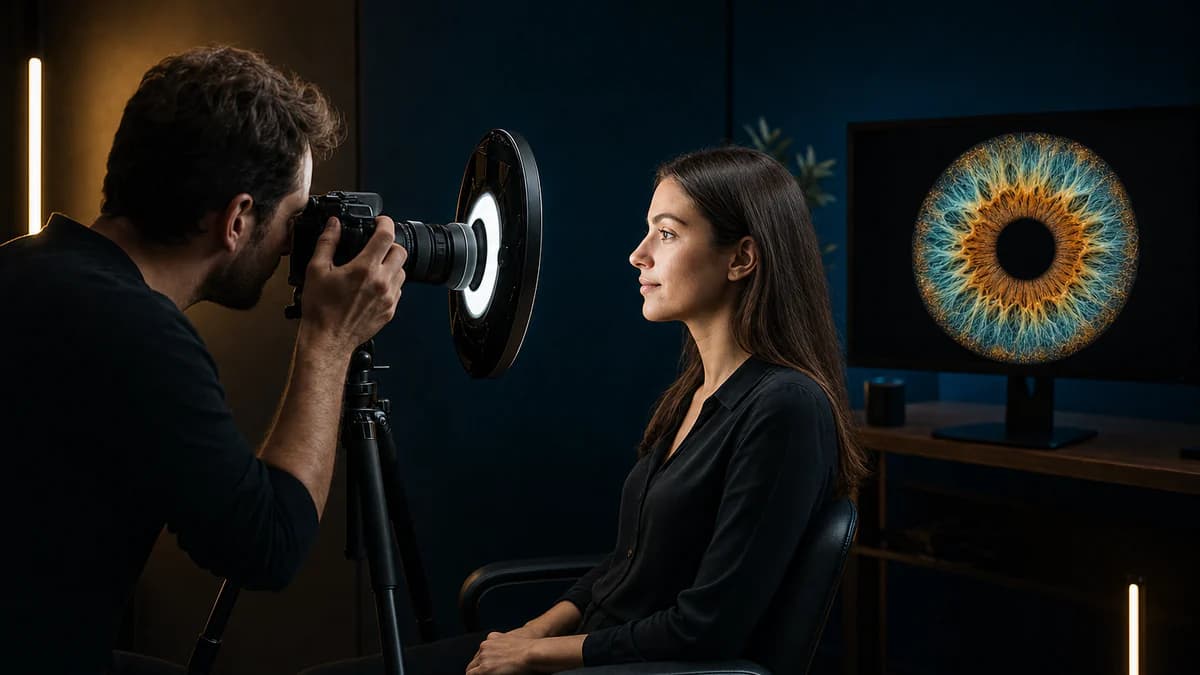
What iris photography is
Iris photography is close-up photography of the colored ring around the pupil. A sharp macro image can show visible crypts, radial streaks, contraction furrows, pigment spots and color transitions that are difficult to see in a mirror.
The result is usually made as art rather than as a clinical record. Studios may deliver a digital portrait, a framed print or a composition that places several family members' irises together.
What happens during a studio session
The photographer positions one eye at a consistent distance from a macro lens, helps the client keep still and captures several frames. Some setups use a chin support or focusing rail. Lighting varies: it may be continuous or flash-based, so ask the studio what it uses if you are sensitive to bright light.
After capture, the photographer selects the frame with the best focus and fewest obstructing reflections. Editing can isolate the iris, clean up stray lashes and highlights, balance color and place the result on a dark or artistic background.
How the photograph becomes artwork
A good edit reveals texture without making the iris look synthetic. Color and contrast adjustments should be consistent and intentional, especially when several eyes appear in one composition. RAW files give a photographer more room to correct white balance and recover tonal detail than a finished JPEG.
Common outputs include:
- Single-iris fine-art prints and framed wall pieces
- Duo, couple and family compositions
- Digital portraits for wallpapers or social profiles
- Small keepsakes such as cards, jewelry inserts or keyrings
Studio photo or phone photo?
A phone photo is an easy way to explore visible color and pattern. With indirect window light, the rear camera and a helper, many phones can produce a useful reference image. Take several frames and choose the one where the iris edge and fine lines look sharp.
A professional setup adds close-focus optics, stable subject positioning, controlled lighting and a color-managed editing workflow. Those advantages matter most for large prints, consistent client sessions and detailed multi-iris artwork.
What to ask before booking
Compare the finished style, not just the capture equipment. Ask whether the quoted price includes the session, retouching, digital file, print and frame; whether additional people cost extra; how long files are retained; and what permission the studio needs before using your image in its portfolio.
Iris photography is artistic and educational. It is not an eye examination, and a consumer photograph should not be used to diagnose health conditions or verify identity.
Stop guessing — measure it
Photo-based color percentages, rarity score, and a shareable Iris Card in 60 seconds. Private: your photo never leaves your device.
Analyze My Eye Color FreeTurn consistent captures into a studio workflow
Measure visible iris color, generate branded client reports and export gallery-ready artwork with Iris Studio.
Explore Iris StudioFrequently asked questions
How much does iris photography cost?
Prices vary widely by location, number of irises, editing style, print size and framing. Check whether a studio's advertised price covers capture only or includes the digital file and finished artwork before comparing offers.
Is iris photography safe for your eyes?
Methods differ between studios, including the type and brightness of lighting. A reputable operator should use camera and lighting equipment according to the manufacturer's instructions, keep the session comfortable and stop if you experience pain or distress. Ask about the setup before booking if you have light sensitivity or an eye condition.
Can I take an iris photo with my phone?
Often, yes. Use the rear camera, indirect window light and a helper, leave a comfortable gap from the eye, tap to focus and capture several frames. A phone image can work well for color exploration, although a dedicated macro setup usually resolves finer detail for large prints.