
Can a Photo Accurately Determine Eye Color?
Yes, with the right photo. Here is exactly where the limits are.
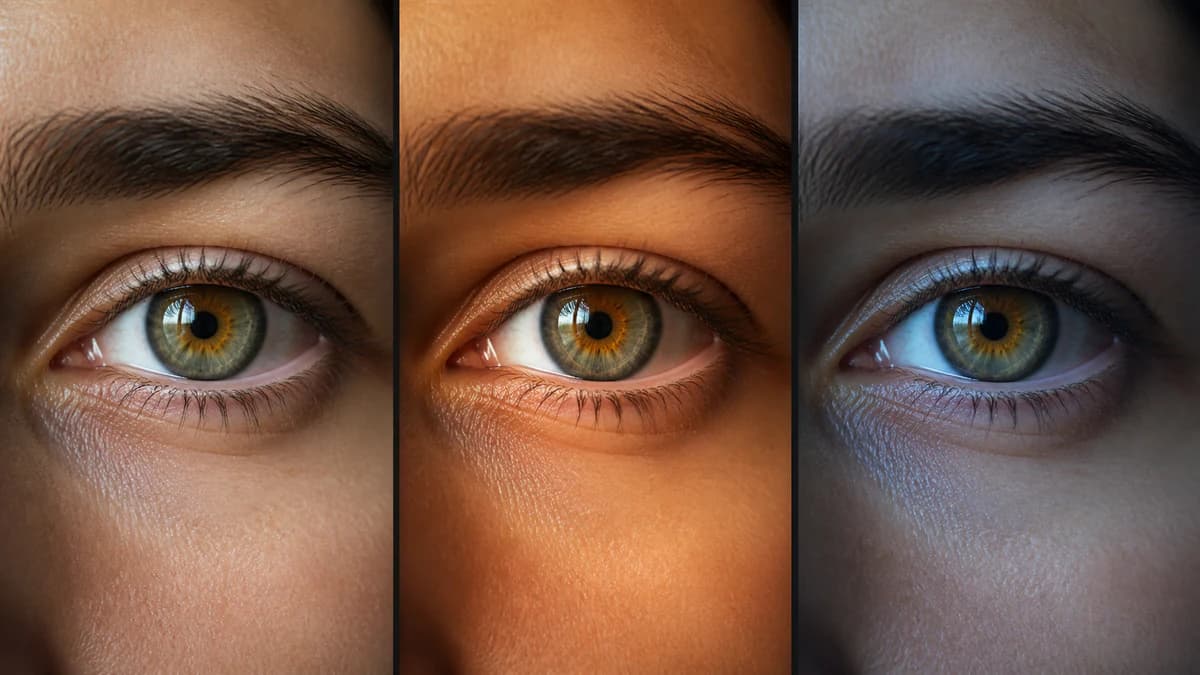
What a photo actually contains
A photo does not contain your iris. It contains the light your iris reflected at one moment, recorded as pixels. In a sharp close-up, the iris covers tens of thousands of those pixels, and every one has a measurable color. An eye color analysis reads that region, groups the pixels into color families and reports the shares — for example mostly green with a quarter hazel.
That measurement is repeatable. Analyze the same photo twice and you get essentially the same answer, because the pixels have not changed. What varies is the photo itself.
What changes the answer
Every step between your iris and the file can shift the recorded color:
- Light source: window daylight records close to true; warm bulbs push everything toward brown and amber, while cool LEDs and sky reflections push pale eyes toward blue
- White balance: the camera guesses the light color and corrects for it, and a wrong guess tints the whole iris
- Flash: a direct flash flattens texture and adds a bright reflection that can hide the pupil ring where hazel and central heterochromia live
- Focus and distance: a soft or distant iris blurs flecks into an average color and loses the second shade entirely
- Filters and beauty modes: these smooth skin and brighten eyes on purpose, so a filtered photo is already edited before analysis
- Compression: heavily shared images lose subtle gradations, especially in gray and blue-gray eyes
What a photo analysis can and cannot tell you
With a good photo, a pixel-level analysis can tell you your dominant color family, your two leading shades with estimated percentages, a palette of the actual colors present with their HEX codes, and rarity context for that family. It settles arguments that labels cannot — whether you are hazel or green, blue or gray — because it reports how much of each is there instead of picking one.
It cannot tell you anything about your health, your genetics or your identity. It measures color, not structure or pattern for recognition, and it does not diagnose anything. The result is an estimate of the colors in the photo you provide, under the light you took it in — which is also exactly what other people see when they look at you.
How to get a result you can trust
Treat the photo like a measurement, not a selfie. Face a window in soft daylight, switch off flash, skip every filter, hold the phone close enough that one eye fills most of the frame, and tap the iris to lock focus before shooting. A saved photo is usually sharper than a quick in-app snap.
Then check consistency: take two photos a minute apart in the same light and analyze both. If the percentages roughly agree, you can trust the result. If they do not, the lighting changed between shots, not your eyes.
Stop guessing — measure it
Photo-based color percentages, rarity score, and a shareable Iris Card in 60 seconds. Private: your photo never leaves your device.
Analyze My Eye Color FreeFrequently asked questions
Is an eye color test from a photo accurate?
For the colors visible in the photo, yes — the analysis measures real pixels and gives the same answer for the same image every time. Its accuracy as a description of your eyes depends on the photo: soft daylight, no flash, no filters and sharp focus give a result that matches what people see in person.
Why do two photos of the same eye give different results?
Because the light was different. Warm indoor bulbs, cool LEDs, sky reflections, flash and auto white balance all change the recorded color before any analysis runs. Two photos taken minutes apart by the same window usually agree closely; one indoors and one outdoors often will not.
Can a photo tell if my eyes are hazel or green?
That is where a measurement helps most. Instead of forcing one label, a pixel-level breakdown reports the green share and the brown or amber share side by side. A clear green majority with little brown is green; a real mix with a brown or gold ring around the pupil is hazel.
Does the analysis measure my iris or just the picture?
The picture. Nothing can measure your iris directly through a photo; what the analysis measures is the light your iris reflected into the camera. That is why photo quality matters so much, and why a good daylight close-up is the closest a photo gets to the real thing.