
Robert Downey Jr. · Actor and producer
Robert Downey Jr.'s Eyes: Brown, Hazel or Blue?
Brown is the careful natural-color answer; The Sympathizer deliberately replaced or altered that look with character-specific blue, green and near-black lenses.
- Evidence status
- In-person color description + production evidence
Last reviewed September 2, 2026
By Iris Analyzer Editorial Team
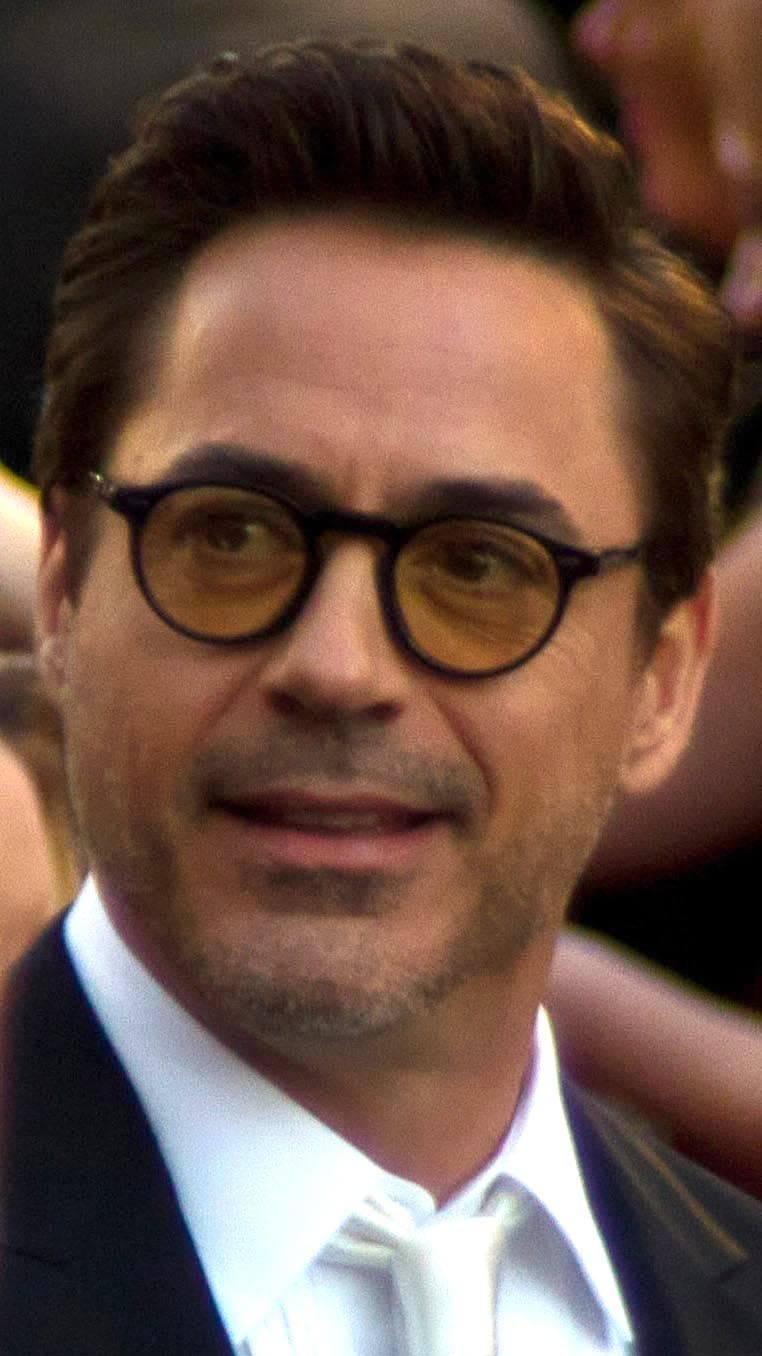
Robert Downey Jr., whose natural eyes are described as brown in an in-person Washington Post profile.
Robert Downey Jr. 2011 AA · David Torcivia · CC BY-SA 3.0 · Local file unmodified

What color are Robert Downey Jr.'s eyes?
Brown is the careful, directly sourced answer. In a Washington Post profile built around lunch with the actor, the writer describes Downey’s big brown eyes. That is an attributable firsthand observation rather than a database entry or guess from a movie still. It establishes the broad natural color family but does not support a precise shade such as chestnut, amber-brown or hazel. Lighting and pupil size can make that brown look lighter or nearly black in different images.
GQ’s later daylong profile concentrates on how large and expressive his eyes appear, reinforcing their importance to his screen presence without supplying a competing color. Size, mobility and intensity are separate attributes from iris pigment. Read together, the sources support brown eyes that are especially noticeable because of expression and facial framing. They do not establish natural blue or green eyes, and character transformations should be evaluated independently from his ordinary appearance.
What does the in-person profile establish?
The 1990 Washington Post feature observes Downey directly during a meal and uses brown as part of its physical description. Its age does not weaken the basic natural-color claim; adult iris color is ordinarily stable, and the wording comes from an identifiable editorial encounter. Still, it is not a clinical examination. The profile cannot tell readers an exact pigment density, a standardized shade or whether vision correction was present. It supports the broad word brown and no more.
GQ’s later portrait helps clarify why color rumors can grow around him. The writer repeatedly notices unusually expressive eyes as Downey shifts between humor, focus and performance. A strong gaze may feel bright, dark or changeable even when no color term changes. A responsible reference keeps the two claims separate: The Washington Post supplies explicit brown evidence, while GQ documents expression and visual impact. Neither article establishes heterochromia or a permanent natural color change.
Why can brown eyes look hazel or almost black?
Brown irises can present a wide range of apparent depth. Strong frontal light may reveal warm radial texture, while a large pupil and shadow can make iris and pupil merge into an almost-black field. Warm sets or reflected skin tones can create golden highlights that some viewers interpret as hazel. None of those impressions is enough to establish a stable green-brown mixture. The explicit in-person source says brown, so a more specific natural subtype would require stronger evidence.
Cleveland Clinic explains broad eye-color differences through pigment and light scattering. Academic photographic grading uses standardized capture conditions because color judgments vary across cameras, exposure and reference displays. Film color grades, flash photographs and online screenshots do not meet that standard. It is therefore possible for Downey’s eyes to look warmer, cooler or darker from scene to scene without any physical change. Brown remains the supported category, not a promise that every image will display identical pixels.
Which contacts did The Sympathizer use?
The Sympathizer deliberately made Downey’s multiple characters visually distinct. In an IndieWire interview syndicated by Yahoo, prosthetic makeup designer Vincent Van Dyke explains that contact choices could lighten the eyes for one persona and that Professor Robert Donahue, also called the Professor or Godwin in coverage, received dark-brown contacts that appeared almost black. The design belongs to a named production and named roles; it should not be mistaken for Downey’s everyday natural eye color.
A separate Gold Derby interview, also syndicated by Yahoo, corroborates the production’s use of character-specific contacts and discusses additional color choices, including green and lighter effects. The exact lens belongs with the specific persona described by the makeup professional, not with Downey as a permanent trait. This role boundary matters because promotional stills can place several dramatically different gazes beside one another. The differences are evidence of successful design, not evidence that his natural irises change color.
What do role contacts prove about his natural eyes?
They prove only that The Sympathizer’s makeup team intentionally altered the appearance for particular characters. A near-black brown lens can deepen natural brown; green or lighter lenses can create a contrasting persona. Production evidence is valuable because it explains why the same actor looks different in a specific series, but it does not establish routine cosmetic use outside that work. Other Downey roles would need their own documented makeup or costume sources before receiving a contact-lens claim.
The reviewed material also does not establish heterochromia. Unequal shadows, catchlights or lens effects within a role can make the two sides look different in one frame, but a still is not a medical assessment. No direct or in-person source here reports stable natural left-right color difference. The supported biography-level answer is brown for both eyes. The series-specific answer is that several characters used intentionally different lenses, each tied to a designed identity rather than Downey’s anatomy.
How this eye-color claim was verified
Verification begins with the Washington Post’s explicit in-person brown-eye description. GQ is used for the narrower point that size and expression shape how the gaze is perceived, not as color evidence. Two interviews with makeup designer Vincent Van Dyke document The Sympathizer’s character-specific contacts and keep those transformations separate from natural appearance. Cleveland Clinic and the academic iris-grading paper provide the general framework for color categories and the limits of uncontrolled photographs.
The conclusion is limited but useful: Robert Downey Jr.’s natural eyes are brown. They may look lighter, warmer or almost black as illumination, pupil size and processing change. The Sympathizer used contacts in multiple colors to distinguish characters, but those designs do not establish naturally blue or green eyes, a permanent change, routine off-screen contact use or heterochromia. Every unusual role appearance should remain attached to its production evidence instead of being folded into a celebrity eye-color myth.
Questions, answered carefully
Sources and what they support
Each source is attached to a specific claim. The portrait is licensed editorial imagery and is not treated as diagnostic evidence.
01 · The Washington Post
All Out Downey
Editorial profileSource checked September 2, 2026
An in-person lunch profile describes Downey’s eyes as brown.
Open source02 · GQ Magazine
The Man in the Irony Mask
Editorial profileSource checked September 2, 2026
A daylong profile discusses Downey’s expressive eyes.
Open source03 · Cleveland Clinic
Eye Colors
Eye-health referenceSource checked September 2, 2026
Eye-color labels describe broad categories rather than universally agreed standardized shades. Hazel can combine visible brown, gold and green tones.
Open source04 · Eye (Nature) via PubMed Central
A novel eye color classification scale for epidemiological studies
Scientific referencePublished December 13, 2013Source checked September 2, 2026
Reproducible photographic iris grading depends on standardized illumination, camera settings and processing.
Open source05 · Yahoo Entertainment / IndieWire
Inside the Prosthetics for Robert Downey Jr.’s Sympathizer Roles
First-person contextSource checked September 2, 2026
Vincent Van Dyke explains character-specific light and dark contact lenses.
Open source06 · Yahoo Entertainment / Gold Derby
The Sympathizer Makeup Designer on Four Characters
First-person contextSource checked September 2, 2026
The makeup designer confirms contacts among the transformations.
Open source