
Alice Eve · Actor
Alice Eve's Eyes: One Blue and One Green
Direct interviews confirm the blue-and-green difference and explain why viewers may not notice it in every scene.
- Evidence status
- Multiple direct interviews
Last reviewed September 2, 2026
By Iris Analyzer Editorial Team
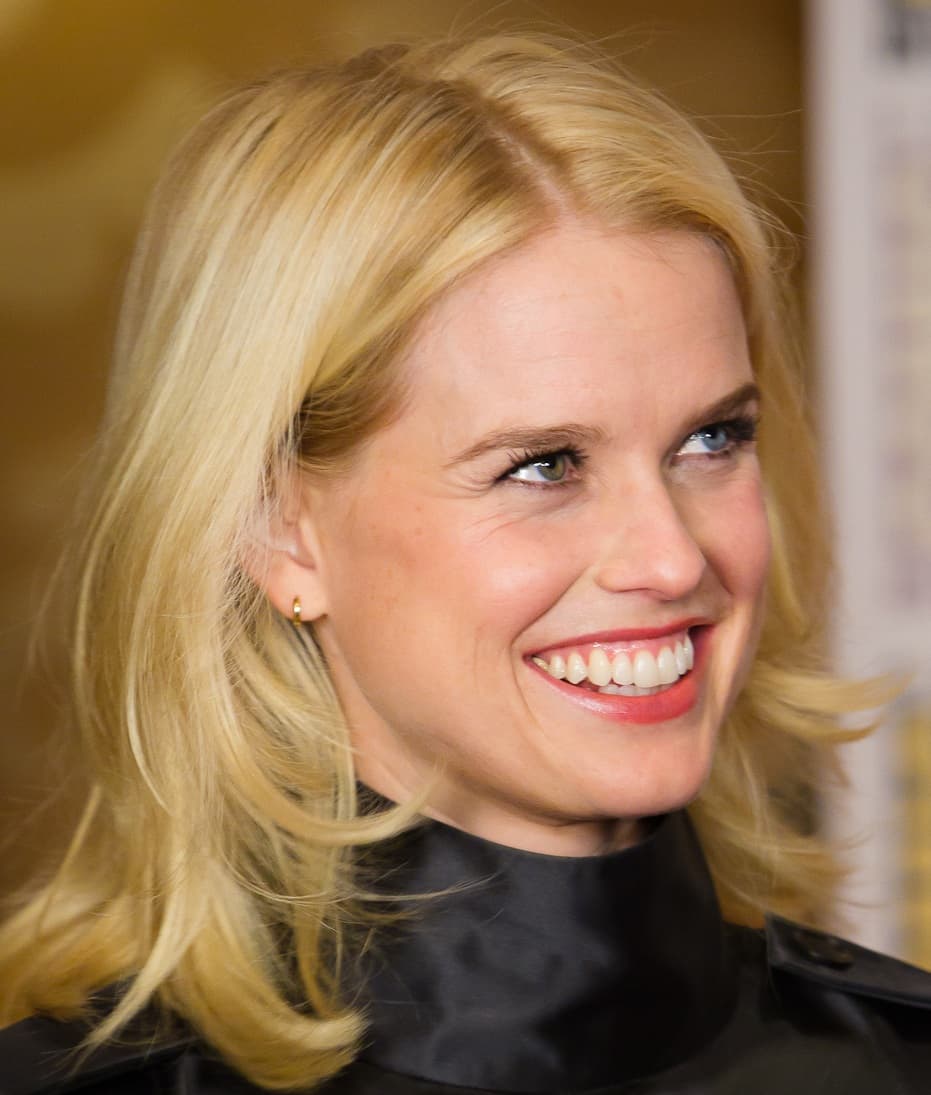
Alice Eve. Her direct interviews—not a color sample from this event portrait—support the blue-and-green description.
Alice Eve 2011 Comic Con (headshot) · Gerald Geronimo · CC BY-SA 2.0 · Commons crop; local file unmodified
.jpg)
What color are Alice Eve's eyes?
The concise answer is one blue and one green. In a Daily Beast interview, the question identifies Eve's left eye as blue and her right as green. Eve responds by confirming that one is green and one is blue and describing the difference as something she barely considered before acting made it a recurring subject. A Glamour interview independently presents the same left-blue, right-green order.
The distinction between what Eve says and what the interviewers say is worth preserving. Her quoted words directly establish the two colors; the side assignment comes from the publications' questions. Because photographs are often mirrored during capture or layout, this article relies on those repeated editorial descriptions rather than trying to decide laterality from the direction she faces in one image.
Why the pattern is described as complete heterochromia
When the dominant overall color differs from one iris to the other, the visible pattern is commonly called complete heterochromia. That is the everyday anatomical description that fits the interview account of one green iris and one blue iris. It differs from sectoral heterochromia, where only a wedge or patch within one iris differs, and central heterochromia, where a contrasting ring surrounds the pupil.
This classification remains descriptive, not diagnostic. A celebrity interview can establish how someone describes a stable visible trait, but it cannot supply a clinical history, rule out every cause, or prove a particular gene variant. Eve speaks positively about being born different, yet this page does not convert that personal reflection into a medical claim beyond the reported appearance.
- Reported colors: blue and green
- Reported laterality: left blue, right green
- Visible pattern: different overall colors between the irises
- Clinical cause: not established by the cited interviews
Why viewers do not notice the contrast in every scene
In a first-person Independent profile, Eve says her eyes are different colors but that the difference is something a person may notice mainly in direct sunlight. She recounts that a former boyfriend took months to see it, while well-lit film scenes can make it more apparent. That observation is more informative than declaring the trait either “obvious” or “invisible,” because visibility changes with conditions.
Blue and green are neighboring visual categories, and both can shift toward gray or teal under cool grading, shadow, or reflections. A large catchlight may hide part of an iris; makeup and surrounding wardrobe colors can alter contrast; distance and video compression can erase subtle color information. None of that means the eyes biologically change color between scenes. It means a camera records a particular lighting and processing pipeline.
How Alice Eve talks about her mismatched eyes
Eve's comments are notably matter-of-fact. In the Daily Beast interview, she says she did not think much about her eyes until she became an actor and other people began asking. She frames being born different as positive rather than presenting the colors as a defect. That firsthand perspective belongs in the article because it prevents a visible trait from being narrated entirely by outside observers.
Her Glamour answer adds a practical detail: she once experimented with blue eyeliner above and green below, linking makeup to the two colors. In a Team Coco interview, she also discusses the experience publicly in her own voice. These appearances support a profile about perception and identity, but they do not authorize speculation about casting decisions, psychological effects, or private health information she did not disclose.
What photographs can—and cannot—confirm
A clear, evenly lit photograph may show one iris reading greener and the other bluer, but it cannot by itself establish cause or medical significance. A mirrored image may reverse apparent sides, and a retouched portrait may reduce the contrast. Sampling a few pixels is especially unreliable because highlights, eyelashes, and the dark pupil can be included accidentally in the measurement.
For that reason, the portrait on this page identifies Eve but does not function as a diagnostic plate. The answer is stronger because multiple direct interviews agree about the color pair and because Eve confirms it in her own words. Where the evidence is one step less direct—the exact left-right order—the text says that publications report it rather than presenting a photo-based inference as personal medical fact.
How to compare a blue-and-green pattern responsibly
To describe your own eyes, capture both in the same frame under neutral indirect daylight, disable filters, and focus on the irises rather than the surrounding makeup. Record what is visible before selecting a label: overall blue versus green, a localized sector, and a central ring are different observations. Repeat the photograph if reflections conceal either iris.
Do not use resemblance to Eve as a diagnosis. A longstanding difference may simply be an individual color variation, while a new or changing difference warrants professional assessment. An analyzer can summarize colors visible in an image, but it cannot establish when the pattern began, why it exists, or whether it has clinical importance. The responsible comparison ends at visible description.
Questions, answered carefully
Sources and what they support
Each source is attached to a specific claim. The portrait is licensed editorial imagery and is not treated as diagnostic evidence.
01 · The Daily Beast
Alice Eve, the Beautiful New Trekkie
First-person contextPublished May 16, 2013Source checked September 2, 2026
In a direct interview, Eve confirms that one eye is green and the other blue; the interviewer reports left blue and right green.
Open source02 · Glamour
Alice Eve's Star Trek Beauty Secrets
First-person contextPublished May 17, 2013Source checked September 2, 2026
A direct beauty interview reports a blue left eye and green right eye and discusses makeup context.
Open source03 · Team Coco
Alice Eve's Two Different Colored Eyes
First-person contextSource checked September 2, 2026
A verified interview video records Eve discussing her differently colored eyes.
Open source04 · The Independent
Credo: Alice Eve
First-person contextPublished December 20, 2013Source checked September 2, 2026
Eve says the difference between her eyes is most noticeable in direct sunlight.
Open source