
Tyra Banks · Model, producer and entrepreneur
Tyra Banks's Eyes: Green, in Her Own Words
The clearest answer comes from Banks herself—and it also resolves a recurring mix-up between the model and a character she created.
- Evidence status
- Direct first-person confirmation
Last reviewed September 2, 2026
By Iris Analyzer Editorial Team
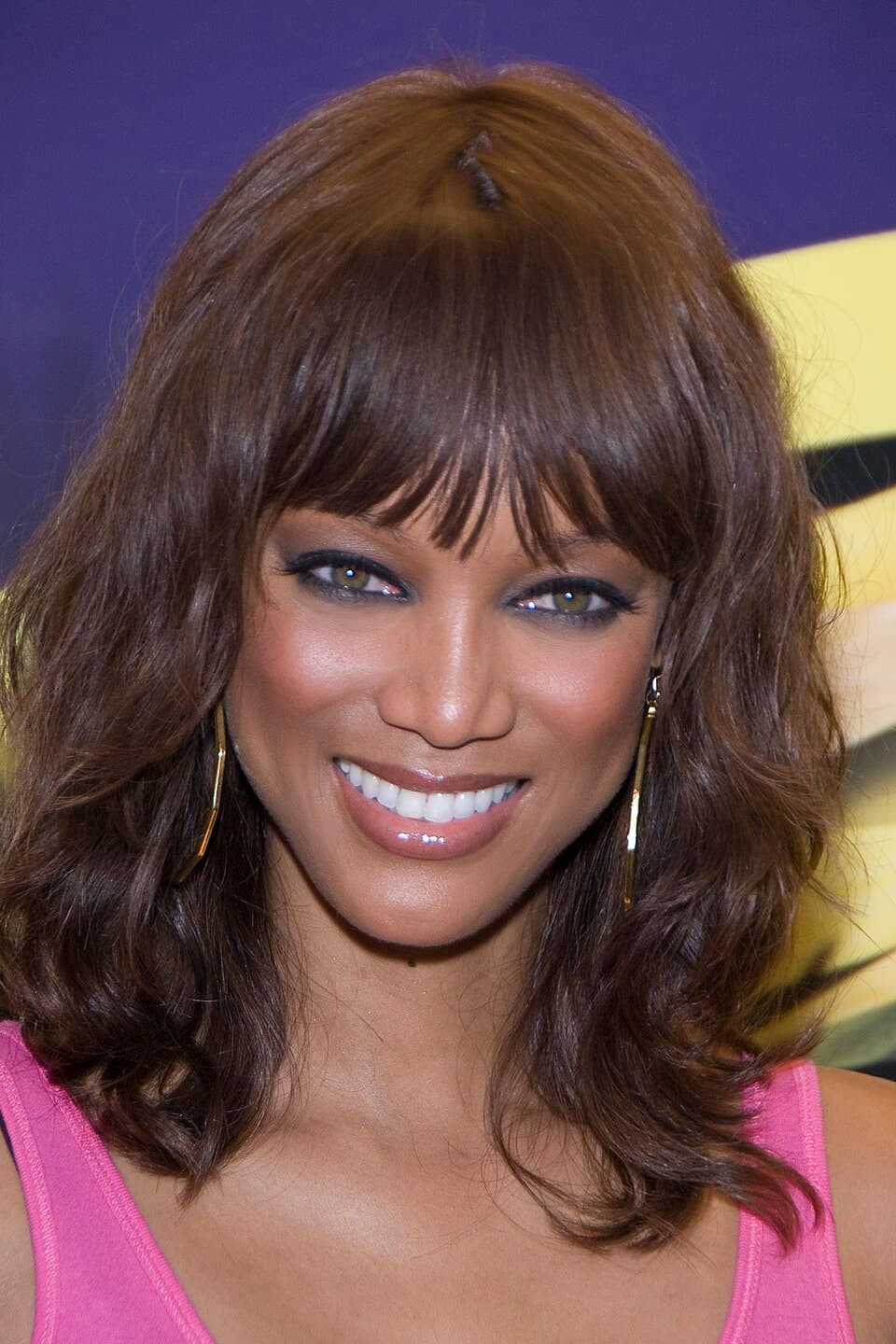
Tyra Banks. Her direct statements—not color sampling from this event portrait—support the green-eye description.
Tyra Banks 2011 · © Glenn Francis, www.PacificProDigital.com · CC BY-SA 4.0 · Wikimedia resize

What color are Tyra Banks's eyes?
Green is the strongest source-backed answer. In a Miami New Times interview about her novel Modelland, Banks contrasted herself with the heroine Tookie, who has one green eye and one brown eye. Banks then stated plainly that she does not have a brown eye and has two green eyes. That direct distinction is unusually useful because it supplies both the answer and the correction to a misconception that can grow around the fictional character.
A CNN interview provides compatible first-person context. Banks recalled advice from her mother that turned features criticized by the fashion industry into a recognizable identity, including her “kooky green eyes.” Vanity Fair also described her green eyes during an in-person profile. Those sources differ in purpose and tone, but they converge on the same broad color family. None offers a standardized iris measurement, so this article stops at green rather than assigning an exact botanical, jewel, or numerical shade.
Why her own description carries the most weight
Celebrity eye-color claims often begin with a photograph and become more confident as they are copied. Banks gives researchers something better: a direct statement made while explaining the physical design of a character. The context makes the wording difficult to misread. She names Tookie’s two colors, identifies the brown eye as the point of difference, and says that her own pair is green. A portrait may illustrate that answer, but it does not need to manufacture it.
The CNN recollection independently shows that green eyes were part of the way Banks and her mother discussed her appearance and public identity. Vanity Fair’s in-person description provides editorial corroboration. Evidence still has limits: everyday color language is not clinical colorimetry, and an interviewer’s adjective does not reveal pigment chemistry. The responsible verdict is therefore “green by direct description,” not “scientifically verified emerald,” “hazel-green by pixel count,” or any other precision the sources never claim.
Tookie has heterochromia; Tyra Banks does not say she does
Tookie De La Crème, the Modelland protagonist, is written with one green eye and one brown eye. Because Banks gave the character some traits that resemble her own, the description can be detached from its context and repeated as though it were autobiographical. The interview itself blocks that leap. Banks says there are similarities and differences, then explicitly identifies eye color as a difference: Tookie has a brown eye, while Banks says she has two green eyes.
That distinction should remain visible wherever the profile discusses heterochromia. A fictional character can be inspired by an author without sharing every physical feature, and a character description is not medical evidence about the author. No cited source says Banks has one differently colored iris, a differently colored sector, or a contrasting central ring. The supported comparison is simpler: both creator and character have green in their descriptions, but only Tookie is described with a green-and-brown mismatch.
Why her green eyes can look hazel, gray, or brown on camera
A light-colored iris is not a flat paint chip. Its visible appearance depends on pigment distribution, iris texture, pupil size, reflection, exposure, and surrounding colors. Cleveland Clinic notes that lighting, makeup, and clothing can bring out different tones even though the underlying iris is not changing. Warm studio light may emphasize yellow or brown components, cool light may push the same eyes toward gray, and deep shadow can make any iris look much darker.
Fashion imagery adds deliberate choices. In an Allure interview, Banks discusses years of preparing makeup for shoots and runways, a reminder that beauty photographs are produced objects rather than neutral clinical records. Retouching, white balance, colored gels, eye makeup, compression, and a photographer’s contrast curve all affect the pixels a viewer sees. The photographic iris-grading study used standardized illumination precisely because inconsistent conditions make comparisons less dependable. One frame should not overrule Banks’s repeated green description.
What the sources do not establish about contacts or health
No source used here establishes that Banks wears green colored contacts. Contact lenses can alter appearance in general, but possibility is not evidence of use by a particular person. A dramatic campaign image, unusually saturated catchlight, or difference between two shoots cannot close that gap. Without a direct statement, production note, or similarly reliable documentation, assigning contacts would convert visual suspicion into an unsupported personal claim.
The sources also do not support a diagnosis. Green eye color is a visible trait, not evidence by itself of disease, visual acuity, or a particular genetic result. Cleveland Clinic advises attention to a genuinely new color change because acquired changes can sometimes warrant evaluation, but that general guidance does not imply a concern about Banks. This profile verifies a public appearance claim and corrects a character mix-up; it does not infer private health information from photographs.
The claim-check verdict and a responsible comparison
The verdict is strong: Banks directly says that she has two green eyes, her CNN recollection repeats the green description, and an in-person Vanity Fair profile agrees. The green-and-brown heterochromia belongs to Tookie, her fictional Modelland heroine. Public evidence does not establish colored contacts, a clinical shade measurement, or a medical condition. Those boundaries make the answer more reliable, not less complete.
To compare your own eyes, use neutral indirect daylight, turn off beauty filters, keep exposure fixed, and photograph both eyes in the same frame. Treat green, gray, hazel, and brown as broad descriptive families before chasing a celebrity match. The published grading research shows why controlled lighting and reference images improve consistency, but a home photograph remains an appearance record rather than a diagnosis. A resemblance to Banks is a color comparison, not proof of shared biology or health.
Questions, answered carefully
Sources and what they support
Each source is attached to a specific claim. The portrait is licensed editorial imagery and is not treated as diagnostic evidence.
01 · Miami New Times
Tyra Banks Talks Modelland, Deadlines, and Aging
First-person contextSource checked September 2, 2026
Banks says that she has two green eyes and contrasts them with her fictional heroine’s green-and-brown heterochromia.
Open source02 · CNN transcript
Piers Morgan Live: Interview With Tyra Banks
First-person contextSource checked September 2, 2026
Banks recounts being characterized by her distinctive green eyes during her career.
Open source03 · Vanity Fair archive
A Model Mogul
Editorial profileSource checked September 2, 2026
The in-person profile independently describes Banks’s eyes as green.
Open source04 · Allure
The Allure Podcast: Beauty Boss Tyra Banks
First-person contextSource checked September 2, 2026
Banks discusses makeup, modeling and production context that shapes how her eyes appear on camera.
Open source05 · Cleveland Clinic
Can Eye Color Change?
Eye-health referenceSource checked September 2, 2026
Apparent eye color can vary with lighting and surroundings, while a new persistent change warrants professional evaluation.
Open source06 · Eye (Nature) via PubMed Central
A novel eye color classification scale for epidemiological studies
Scientific referencePublished December 13, 2013Source checked September 2, 2026
Reproducible photographic iris grading depends on standardized illumination, camera settings and processing.
Open source