
Hazel vs Brown Eyes: How to Tell the Difference
Light brown or true hazel? The flecks decide, not the darkness.
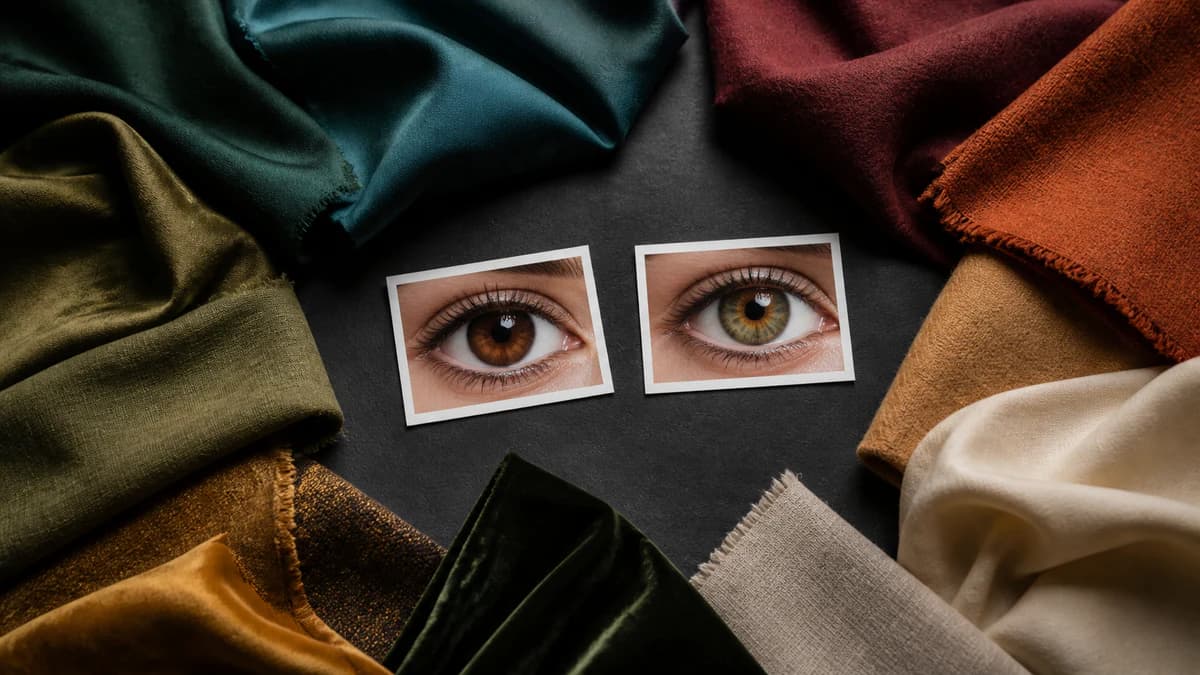
Brown is one color family. Hazel is two.
Brown eyes carry enough melanin in the front layer of the iris to absorb most light, so the whole disc reads as one hue — anywhere from near-black to a warm, light caramel. Lighter brown is still brown: the pigment is simply thinner, not mixed with anything else.
Hazel eyes carry a moderate amount of melanin that is unevenly distributed. Where it thins, the iris scatters light and shows a second color family — green, gold or amber — usually in a burst around the pupil or in flecks toward the rim. That visible second color is the definition of hazel. Darkness alone never makes an eye hazel, and lightness alone never makes it brown.
The daylight flecks test
Stand near a window in soft, indirect daylight, hold the phone close and look at one eye in a sharp photo. Then ask four questions:
- Ring test: is there a distinct burst of green, gold or amber around the pupil that gives way to a different color toward the rim? Hazel. Is the color even from pupil to rim? Brown
- Shift test: do your eyes read greener or more golden outdoors and browner indoors? That light-dependent swing is a hazel tell. Brown stays brown under every lamp
- Distance test: hazel often looks brown from across a room and only shows its second color up close. Brown looks the same at every distance
- Pattern test: hazel usually shows streaks or flecks of a second hue, not just lighter and darker brown. Brown eyes can have visible texture, but it stays in one family
Why so many hazel eyes get filed under brown
Brown is the world’s majority eye color, at roughly three in four people, while hazel sits near one in twenty. Most people are labeled at a glance, in ordinary indoor light, and brown is the default guess. Hazel eyes also photograph brown easily: warm indoor lighting, auto white balance and small, compressed images all bury the green and gold that daylight reveals.
If you were told “brown” as a child but friends keep arguing that your eyes look green in the sun, the disagreement itself is a strong hint that you are hazel.
Let the percentages settle it
A pixel-level analysis of a clear daylight photo removes the guesswork. It samples the visible iris and reports how much of it falls into each color family. A brown eye comes back almost entirely in the brown family. A hazel eye comes back as a mix — brown or amber leading, with a real green or gold share rather than a trace. The result names both leading shades with their percentages, so “light brown with green flecks” and “hazel” stop being a matter of opinion.
Stop guessing — measure it
Photo-based color percentages, rarity score, and a shareable Iris Card in 60 seconds. Private: your photo never leaves your device.
Analyze My Eye Color FreeFrequently asked questions
Is hazel just light brown?
No. Light brown is a single color family with less pigment. Hazel is a mix: moderate melanin plus a visible second family — green, gold or amber — usually concentrated around the pupil. If your eyes show only one hue, however light, they are brown.
Can brown eyes have green flecks and still be brown?
A few scattered flecks do not change the family. If brown covers almost the whole iris and the green is a trace, the eye is brown. When the second color carries a real share of the iris — a clear ring or broad streaks — the eye is hazel. A percentage breakdown shows which case you are.
Which is rarer, hazel or brown?
Hazel, by a wide margin. Brown eyes belong to roughly 75% of people worldwide; hazel is near 5%. Both numbers are coarse global estimates, and the share of hazel is higher in populations of European and Middle Eastern ancestry.
Do hazel eyes change color?
Not physically, but they appear to. Because hazel irises carry two color families, a shift in lighting changes which one dominates: daylight favors the green and gold, warm indoor light favors the brown. Brown eyes have one family, so they look the same in every light.