
Seasonal Color Analysis, Starting From Your Eyes
Your iris already holds half the answer.
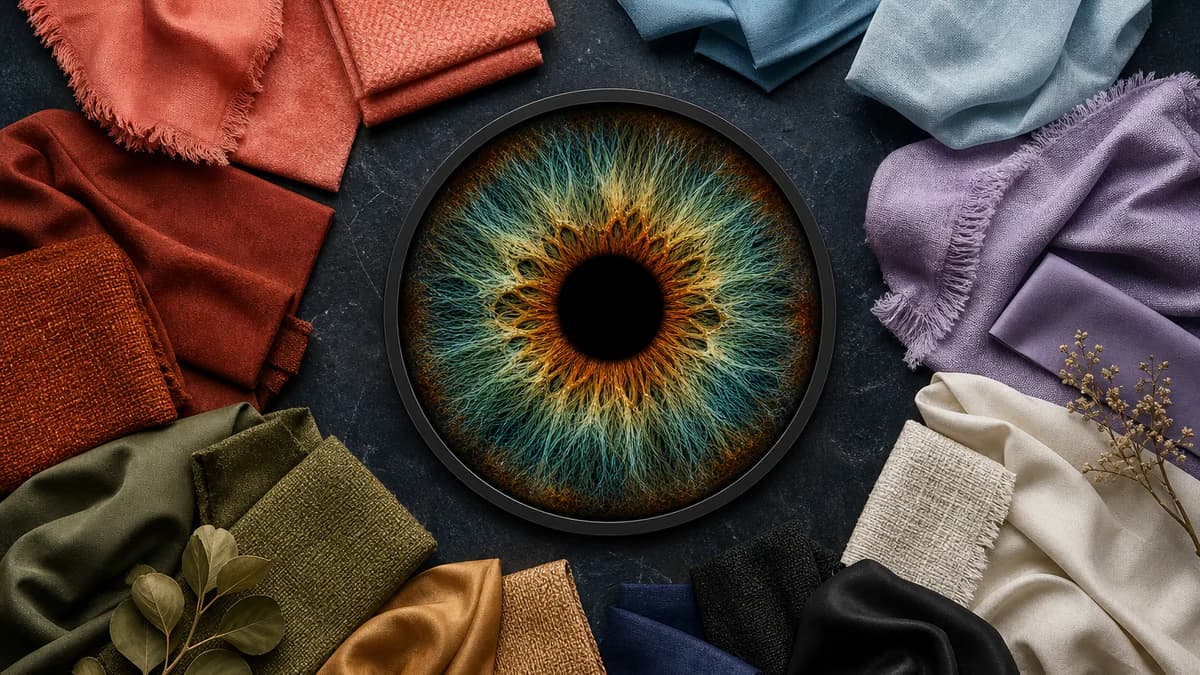
What seasonal color analysis is
Seasonal color analysis sorts people into palettes — classically Spring, Summer, Autumn and Winter — based on the undertone, depth and contrast of their natural coloring: skin, hair and eyes. The promise is practical: colors from your season make you look rested and vivid, while colors that fight your undertone can read as tired or washed out.
The four classic seasons split along two axes: warm versus cool undertone, and light versus deep overall contrast.
- Spring: warm and bright — coral, turquoise, warm greens
- Summer: cool and soft — lavender, powder blue, rose
- Autumn: warm and muted — rust, olive, camel, gold
- Winter: cool and intense — true red, navy, black, icy tones
Why your eyes anchor the analysis
Hair gets dyed and skin tans, but iris pigment stays remarkably stable through adult life — which is why analysts look into your eyes first. The colors woven through an iris are undertone evidence: golden and amber flecks point warm, while gray, cool blue and blue-green structures point cool.
Eye color alone does not fix your season — two brown-eyed people can land in different palettes — but it is the most reliable single anchor, and the detail inside the iris often settles cases the mirror cannot.
Warm or cool: reading your iris undertone
Look at a sharp close-up of your eye in daylight. Warm signals: visible gold, honey or amber tones, a rusty or copper central ring, and an overall impression that leans yellow-brown. Cool signals: clear gray, slate blue, cool green, and a crisp contrast between the iris and the white of the eye.
Many irises carry both — a cool gray-blue field with a warm central ring is common. That mix is exactly why category labels like 'blue' or 'hazel' are too blunt for palette work: the proportions matter.
From eyeballing to measuring
Quiz-style analysis asks you to judge your own coloring, and people are famously bad at it — the same iris gets called blue, gray or green depending on light and mood. Measuring flips that: an iris analysis reads a close-up photo and returns your actual color families with percentages, including the gold content that decides warm versus cool.
A free eye color analysis gives you the measured mix; the paid palette turns it into a wearable color set — clothing, makeup, hair and jewelry tones matched to what is genuinely in your eyes rather than to a label.
Using your palette day to day
Start where color sits closest to your face: tops, scarves, glasses frames, earrings and makeup. Colors that echo tones inside your iris make your eyes read brighter; colors that clash with your undertone dull them.
Keep your season as a guide, not a law. The goal is a wardrobe where most pieces flatter by default — and the fastest way there is knowing, in numbers, what your coloring actually is.
Stop guessing — measure it
Photo-based color percentages, rarity score, and a shareable Iris Card in 60 seconds. Private: your photo never leaves your device.
Analyze My Eye Color FreeFrequently asked questions
Can I do seasonal color analysis online?
Yes. Quiz-based tools ask you to self-judge your coloring, which is where most errors come from. Photo-based analysis is more reliable: a measured reading of your iris colors gives the undertone evidence that anchors a season, and it takes about a minute.
Which season goes with my eye color?
No color maps to one season by itself. Golden-brown eyes lean warm (Spring or Autumn), gray and cool blue lean cool (Summer or Winter), but the deciding factors are the undertones inside the iris plus your skin and hair. Treat eye color as the anchor, not the whole answer.
Do eyes matter more than hair or skin in color analysis?
They carry special weight because they do not change: hair is dyed, skin tans and fades, but adult iris pigment is stable. Analysts often resolve borderline warm-versus-cool calls by looking at the flecks and rings inside the iris.