
Do Eyes Change Color? What's Real and What's Light
Most "color changes" are light playing on a fixed palette — here's how to tell.
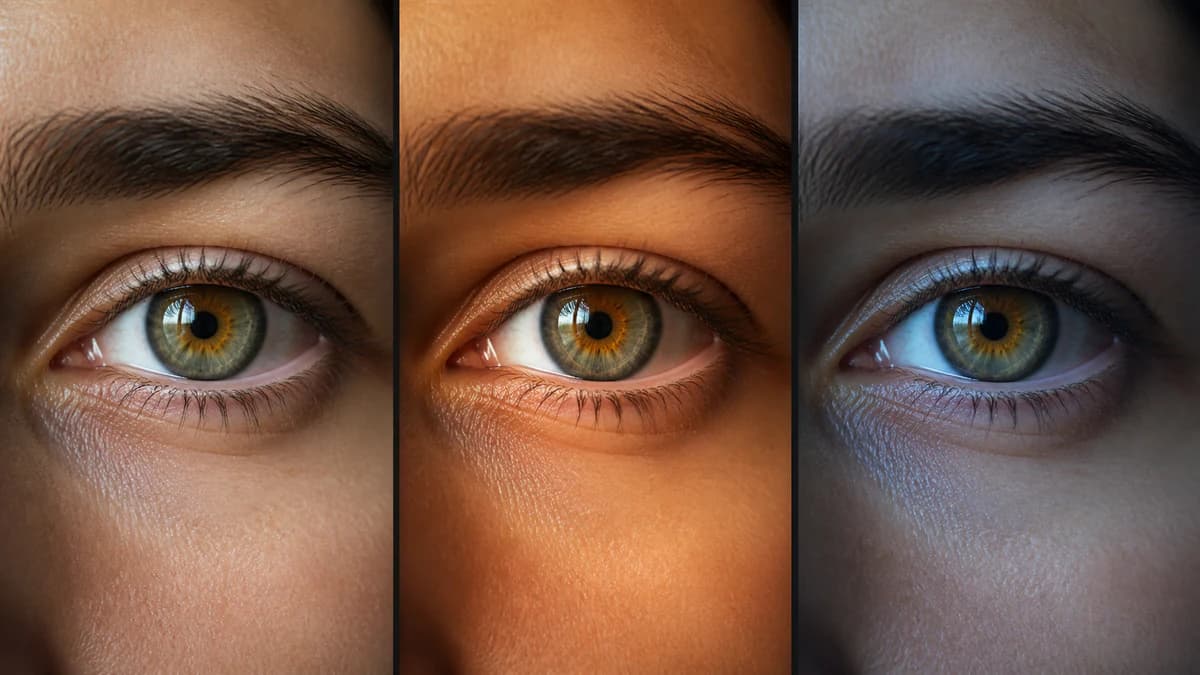
The short answer
For adults, real eye color change is rare. The melanin in your iris is stable — it doesn't fluctuate with mood, weather, or what you had for breakfast. What changes constantly is everything around the pigment: the light hitting it, the size of your pupil, and the colors reflected from your clothes and surroundings.
So when your eyes "turn green" some days, your iris isn't rewriting its chemistry. It's the same fixed palette being lit, framed, and reflected differently — and some palettes (hazel and gray especially) are far more reactive than others.
Babies: the one true color change
The famous exception is infancy. Many babies — especially those with lighter skin — are born with blue-gray eyes because their melanocytes haven't produced much pigment yet. Over the first months and years those cells keep working, and eyes commonly settle darker: blue to green, green to hazel, hazel to brown.
Most of the change is done by around age three, though subtle darkening can continue through childhood. Whatever color emerges then is, barring the exceptions below, the color for life.
Why your eyes seem to change day to day
Four things move the needle, none of them pigment:
- Light temperature: warm indoor light amplifies gold and brown zones; cool daylight favors green, blue, and gray
- Pupil size: a dilated pupil compresses the visible iris and makes eyes look darker; a constricted one exposes more color
- Reflection: iris surfaces mirror nearby colors — a green shirt, sky through a window, even bold makeup
- Cameras: auto white balance re-tints every photo, which is why your eye color never looks the same twice on your phone
When a change is real
Genuine change does happen. Aging can slowly lighten or dull iris color over decades. Certain glaucoma eye drops (prostaglandin analogs) can permanently darken the iris. Injury and some inflammatory conditions can alter color in one eye.
The pattern that matters: slow, symmetric, lifelong drift is usually benign, while a noticeable change over weeks or months — especially in one eye only — is a reason to see an eye doctor, not a styling question.
Pin down your baseline
The way out of the guessing game is measurement. Photograph one eye in indirect daylight and run the percentages — that mixture is your baseline. If you're curious whether your eyes actually shift, repeat the same photo conditions on another day and compare numbers instead of impressions. The percentages will settle the argument that the mirror keeps reopening.
Stop guessing — measure it
Photo-based color percentages, rarity score, and a shareable Iris Card in 60 seconds. Private: your photo never leaves your device.
Analyze My Eye Color FreeFrequently asked questions
Can eyes change color with mood?
Not directly. Emotion doesn't touch pigment — but it does change pupil size, and a dilating or constricting pupil changes how much iris shows and how dark it reads. Add tears (which increase reflectivity) and "my eyes go gray when I cry" has a real mechanism with zero color change.
Do eyes get lighter or darker with age?
Both happen, slowly. Children's eyes commonly darken as melanin production matures. Late in life some irises lighten or dull slightly as pigment density drops. Both changes take years — anything faster deserves professional eyes on it.
Can diet or supplements change your eye color?
No credible evidence supports it — claims about honey, raw food, or supplements changing iris color circulate online without a mechanism or a study behind them. Treat any product promising eye color change as a red flag.
Why are my eyes a different color in every photo?
Auto white balance. Your camera re-tints each shot to compensate for the light source, and low-pigment eyes swing hardest. For a photo that shows your true color: indirect daylight, no flash, neutral background.